In the morning
We start when they're asleep
Newborn sessions take place in the morning. I photograph while the baby sleeps and stop as soon as they wake up.
The first days, photographed while they sleep
from 10 to 15 days of lifeI photograph newborns in the studio, in Trani, in the first 10 to 15 days of life. Sessions take place in the morning: I photograph while the baby sleeps, and I stop every time they wake up to feed or be changed.
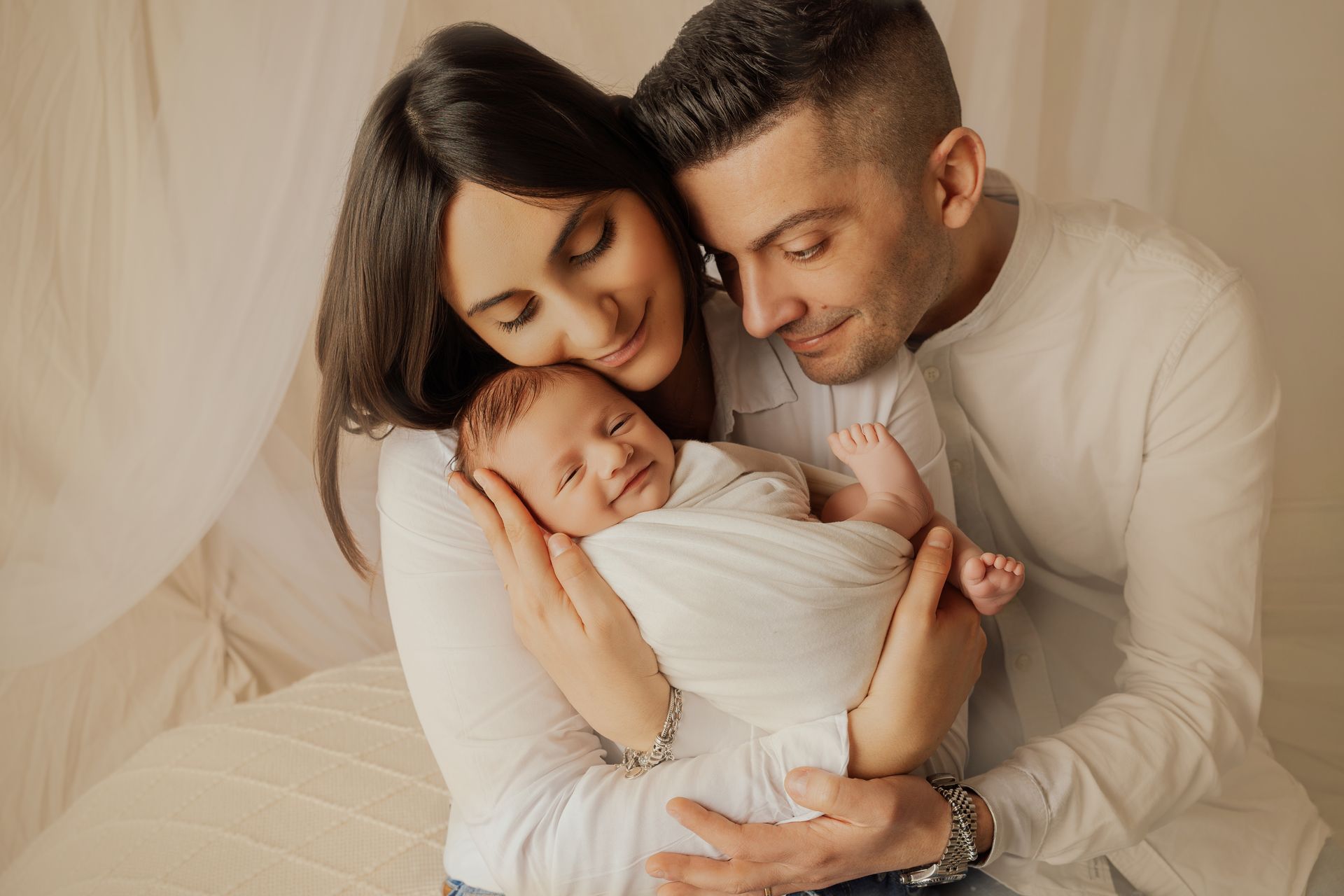
The newborn photography session takes place in the first 10 to 15 days of life, ideally within the first 10. In those days sleep is deep and the curled positions, the ones the baby held in the womb, come naturally.
After 15 days the newborn stays awake longer and stretches out their legs. I still photograph them, but the images that come out are different, more like an awake baby than a sleeping newborn: those belong in family and children's portraits. I prefer to tell you this before you book.
During pregnancy we note down the period, we set the exact day after the birth. No one knows in advance when the baby will be born: I keep a margin of free mornings around the expected week, you message me as soon as the baby is born, and from there we arrange it within a few days.
With a baby of three weeks, or two months, message me anyway. I work in a different way and aim for a different portrait, that of a baby looking at you with open eyes.
A newborn session takes place in the morning: I photograph while the baby sleeps and I stop as soon as they wake up. There is no fixed schedule. They feed when hungry, you change them when needed, and then we pick up where we left off.
You stay in the room the whole time. You breastfeed whenever you like, without asking my permission and without rushing. While you wait I prepare the next position, and when there is nothing to prepare I wait together with you.
After the session I select the shots, edit them one by one and show them to you. How many photos I deliver and how long it takes, I tell you before you book, along with everything else.
I photograph at Studio Zitoli, on Via Umberto 230 in Trani, thirty minutes' drive from Bari. My name is Alessia Zitoli, and for those coming from the regional capital I have written a page with the distance and parking.
I turn up the room temperature before you arrive and keep it high until we have finished. An undressed newborn loses heat quickly, and when they're cold they won't sleep or let themselves be positioned.
The wraps and blankets go into the washing machine after every baby, including hats: whatever touches the skin does not pass from one family to another. I clean the baskets and props before you arrive.
I wash my hands before starting and every time I move the baby. They're the same hands that lift and reposition them all morning.
I speak quietly and move slowly, and I ask you to do the same. A newborn wakes up from a sudden movement or a cold hand far more easily than from two adults speaking in low voices.
I never force a position and I never leave the baby balanced precariously. When a pose does not come naturally within a few seconds I let it go and move on to the next one, and sometimes I come back to it later.
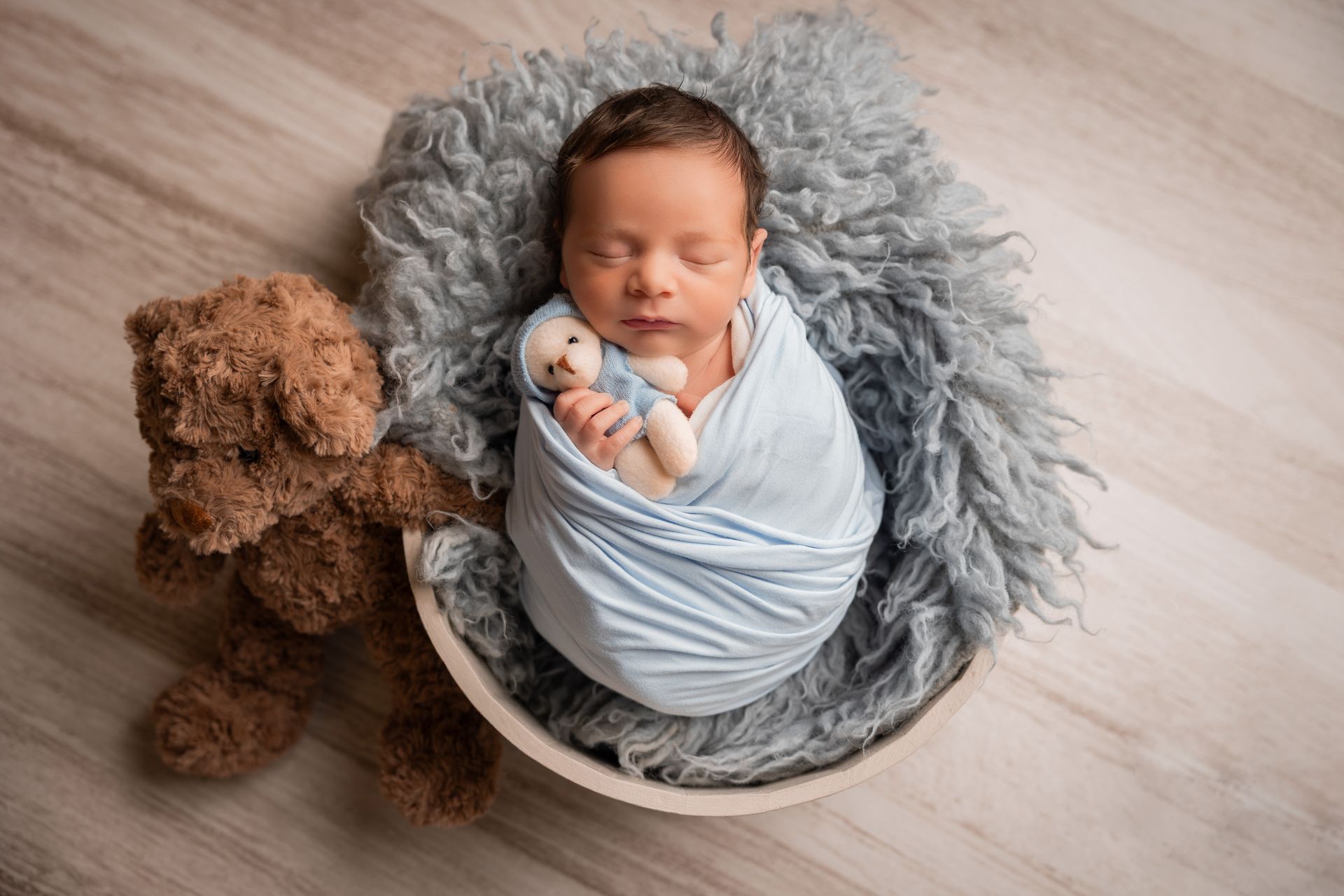
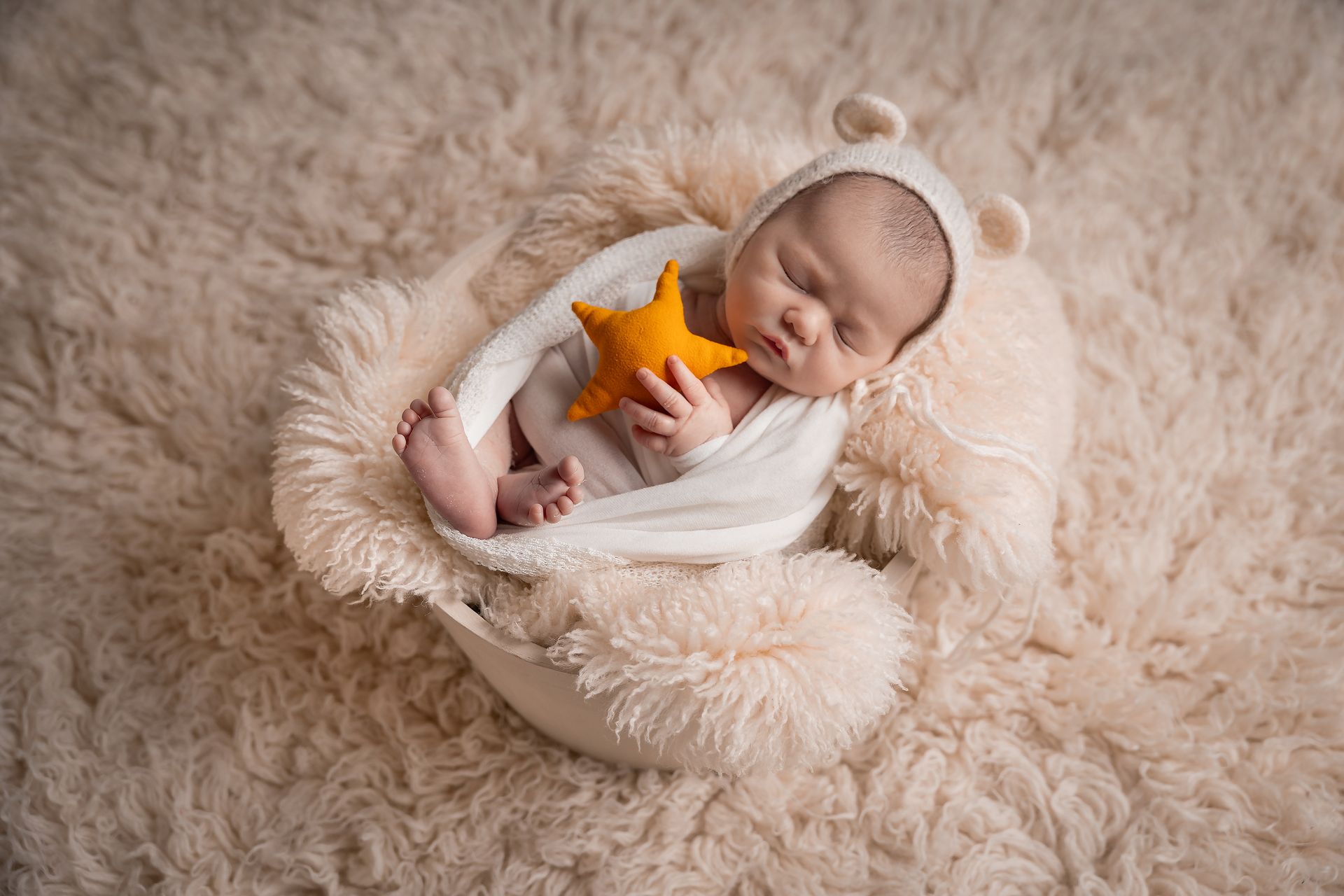
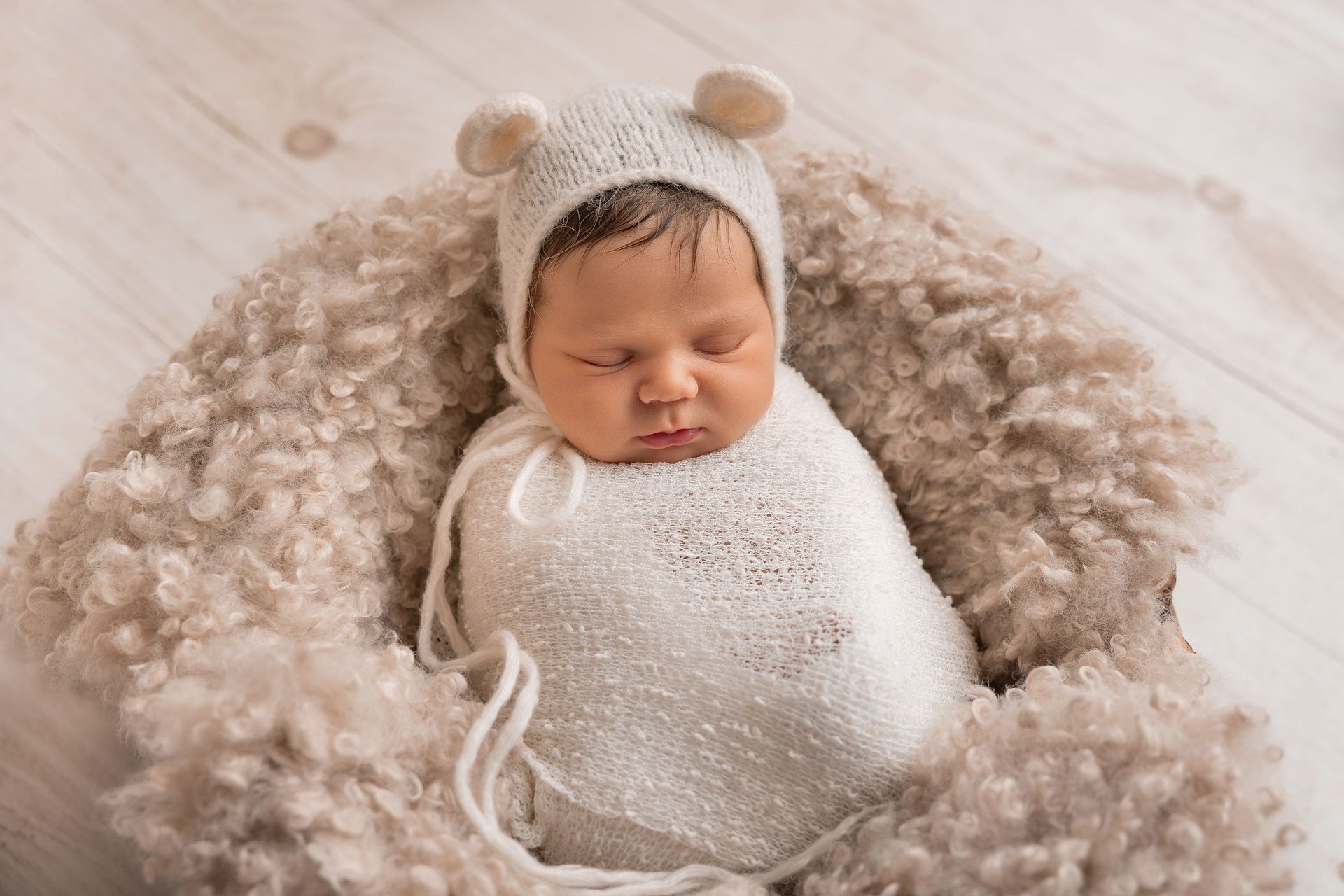
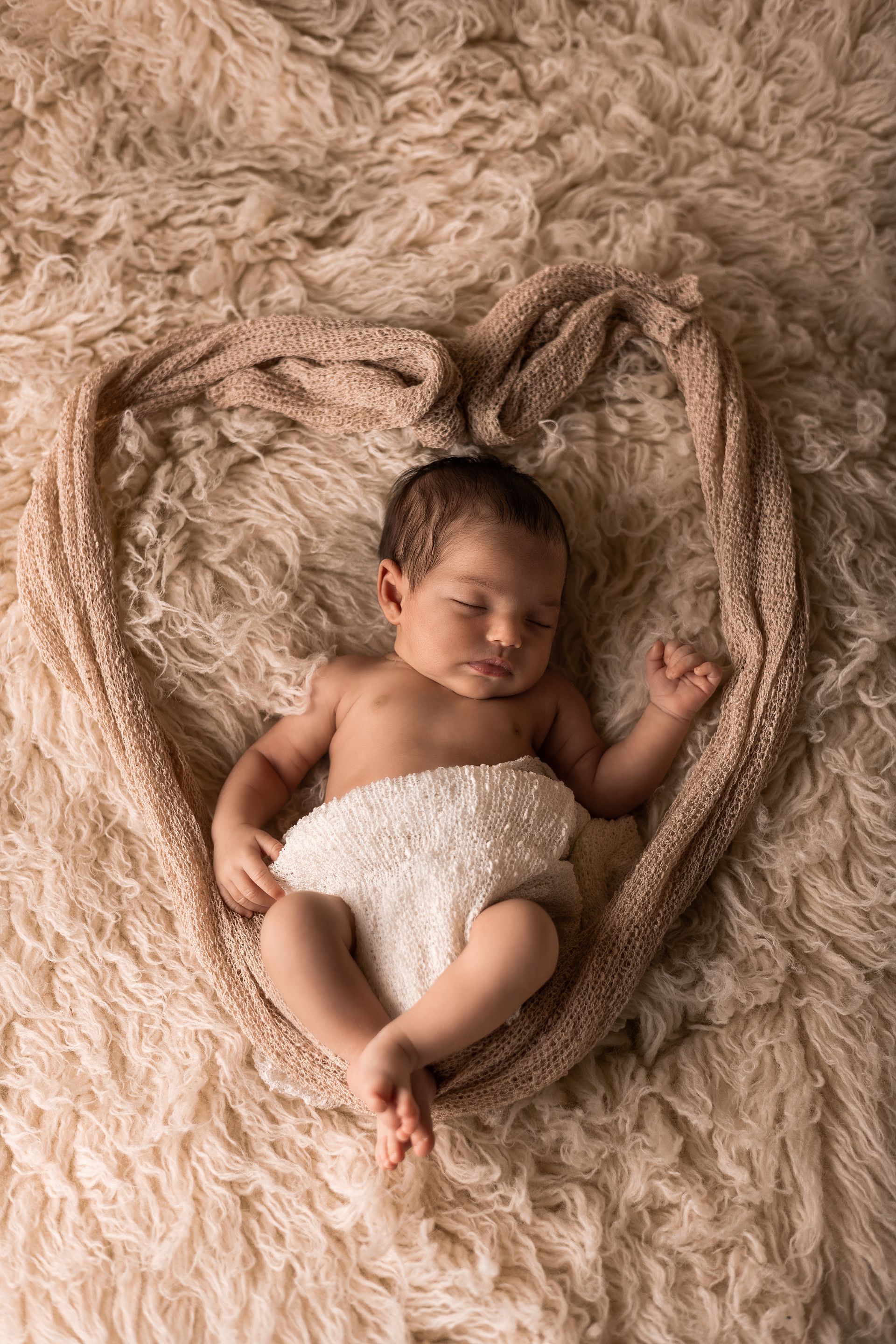
In the photos you see fur baskets, a bowl, a wooden moon, long pile rugs. The baby sits inside curled up and supported, never balanced on the edge, and while I photograph there is always a hand on them: mine or yours. In the finished photo that hand often can't be seen, but in the room it's there.
Newborn posing has one simple limit: newborns can't support their own weight. The images where a baby seems to be holding themselves up, head resting on their hands, are made from two shots layered together afterwards. When you show me one of those, I explain how it's done, rather than improvising it on the spot. I've written about this in full in the safety guide.
I also check what isn't obvious: that the wrap doesn't press on the neck or legs, and that the chin isn't squashed against the chest. I check the colour of the hands and feet at every new position. When the baby protests, I stop.
There is no timed schedule, but there is an order. Within that order, we go at the baby's pace.
Newborn sessions take place in the morning. I photograph while the baby sleeps and stop as soon as they wake up.
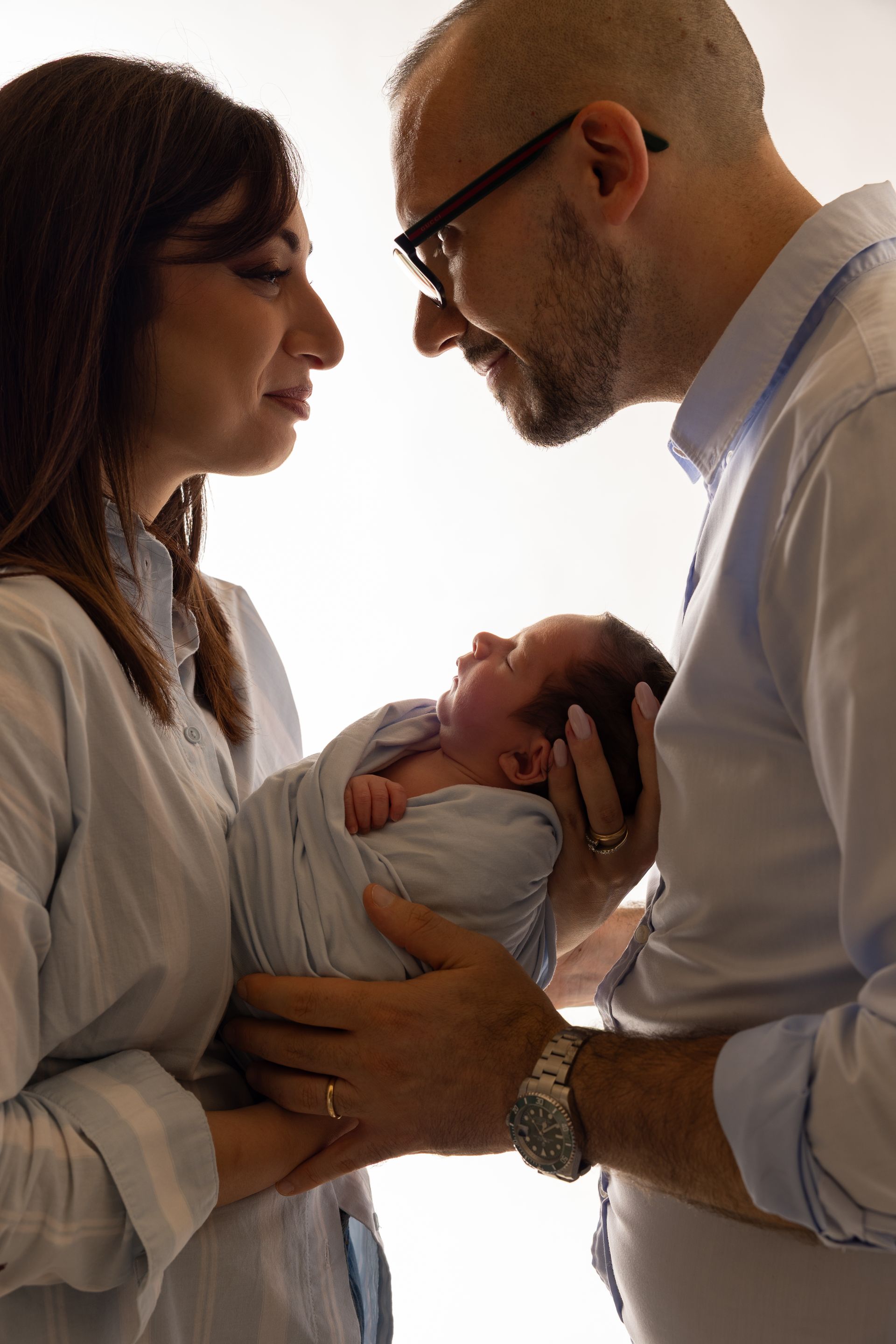
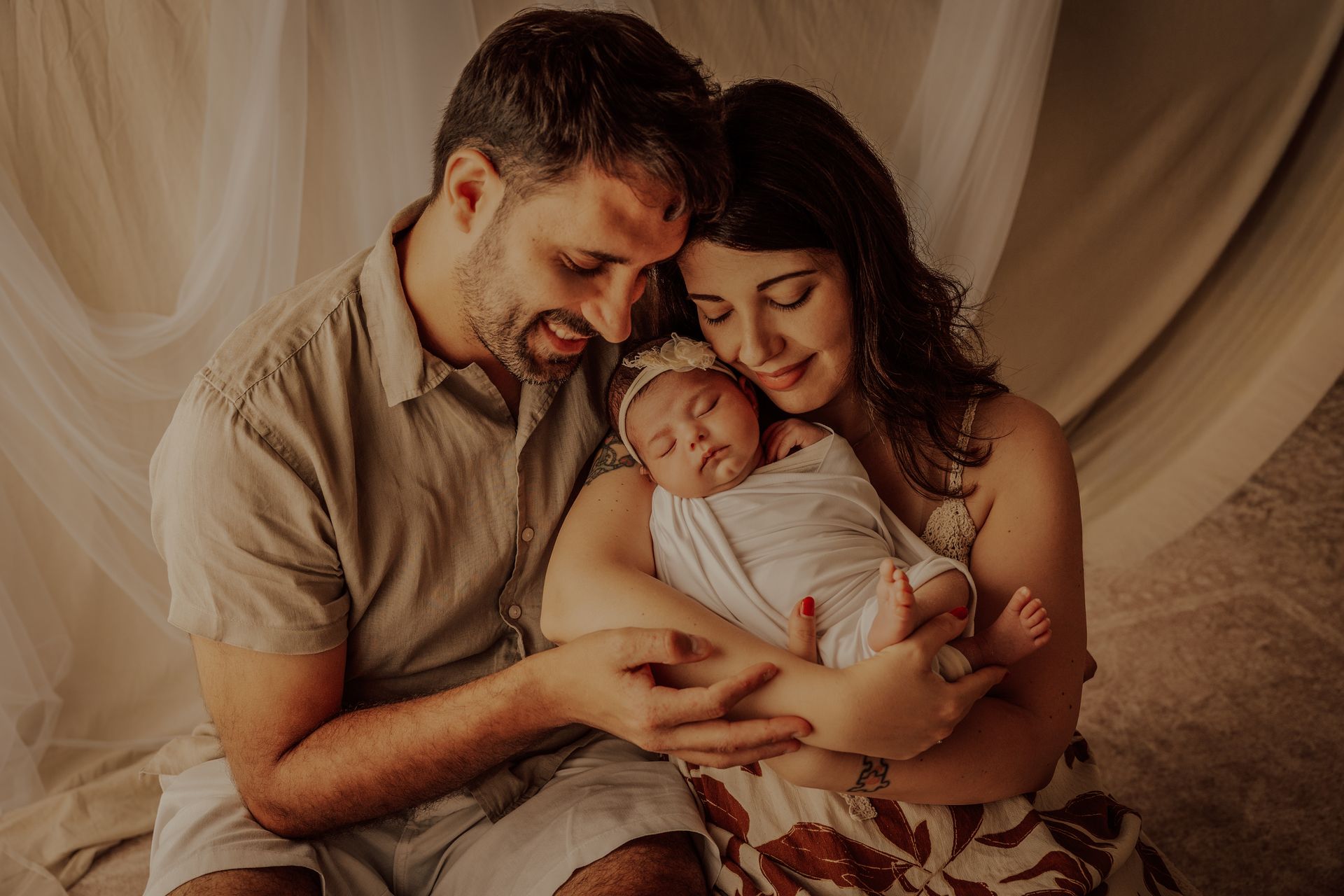
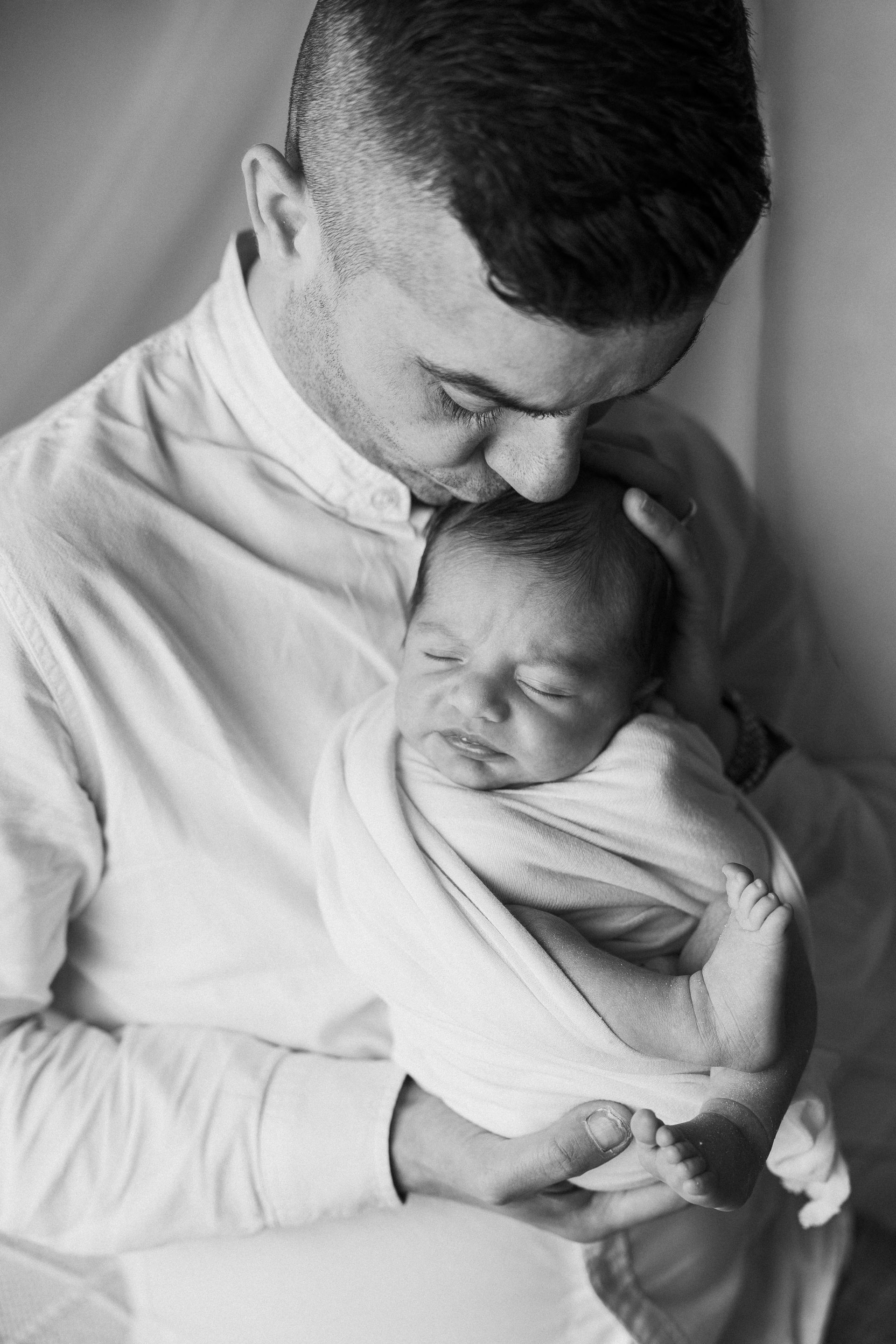
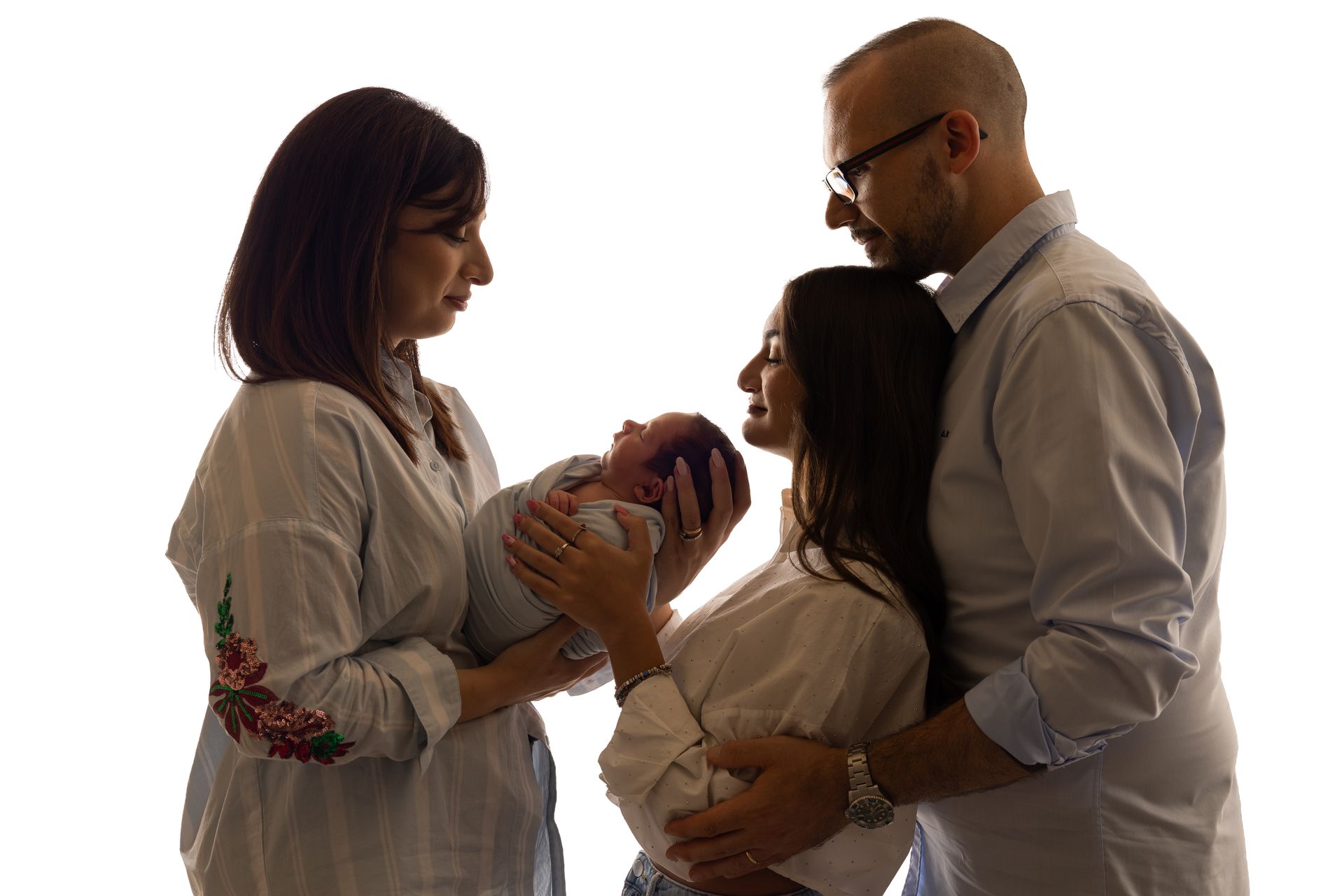
Hands holding, the baby asleep on your chest: I take the shots with the parents at the start, dressed as you arrived and often without looking at the camera.
A child of three cooperates for as long as they feel like it. We take the shots with them first, then let them go and play while I continue with the newborn.
The baby lies in the baskets curled up and supported, never balanced on the edge, and while I photograph there is always a hand on them, mine or yours. If a pose does not come naturally within a few seconds, I let it go.
They feed when hungry, you change them when needed, and then we pick up where we left off. You stay in the room the whole time and breastfeed whenever you like.

I select the shots, edit them one by one and show them to you. What you choose to take home is decided in front of the photos.
How it worksThese windows come from experience, not fixed rules: if your baby already has a few extra days, write to me anyway and we will see what we can do.
Bring what you use for changing and feeding. Wraps, blankets, baskets and backdrops are already in the studio, ready before you arrive.
Nappies, wipes, the cream you use and two more changes of clothes than usual. In the first days there are a lot of changes, and one extra clean bodysuit costs you two minutes instead of half a morning.
If you're bottle feeding, bring enough for two feeds: it often happens that the baby asks for one more than planned. If you're breastfeeding, you don't need to bring anything.
Bring it even if you rarely use it at home. On the posing bed it often helps bring the baby back into a deep sleep between one position and the next, and I slip it out just before the shot.
The handmade blanket, or the outfit they wore home from hospital. These are the objects you'll recognise in ten years' time when you look at the photos, and I don't have them in the studio.
Hands holding, the baby asleep on your chest: I take the shots with the parents in them at the start of the session, dressed as you arrived, often without looking at the camera.
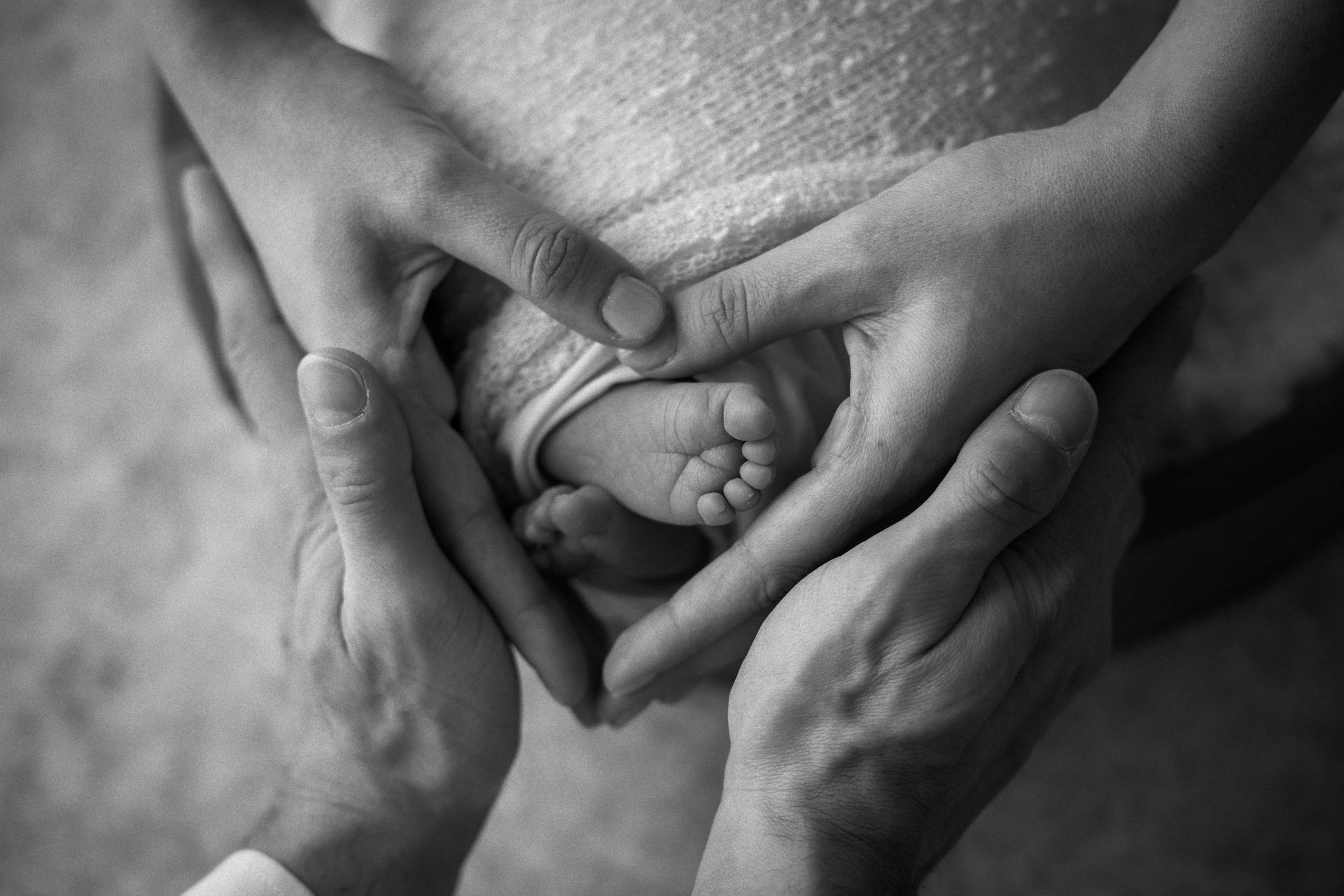
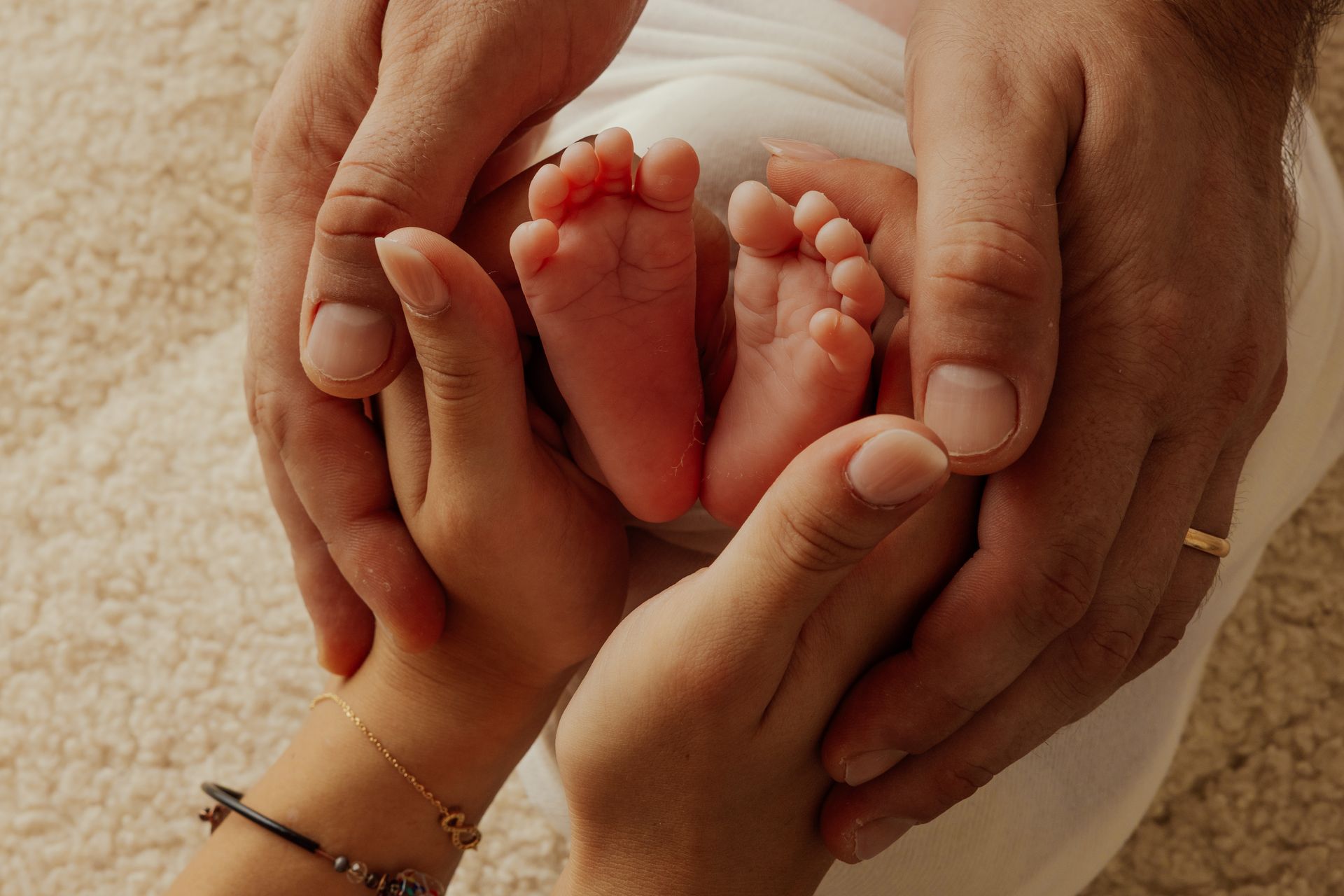
Almost no one feels ready to be photographed ten days after giving birth. That's why I work up close, on your hands and the baby's face, more than on your faces. These are usually the photos I recommend printing large.
Siblings appear in the images too. A child of three cooperates for as long as they feel like it: we take the shots with them first, then let them go and play while I continue with the newborn.
Those who have already done the pregnancy photos come back after the birth, and the two sessions look good side by side.
The session includes the time in the studio, the selection and post production of the shots I deliver. Albums, prints and high resolution files are chosen afterwards, in front of the photos.
How many photos fit in an album and what the difference is between the formats is covered in albums and prints.
For a quote for your particular case, message me: the expected week of the birth is enough. The studio number and email address are in contacts, for those who prefer not to use WhatsApp.
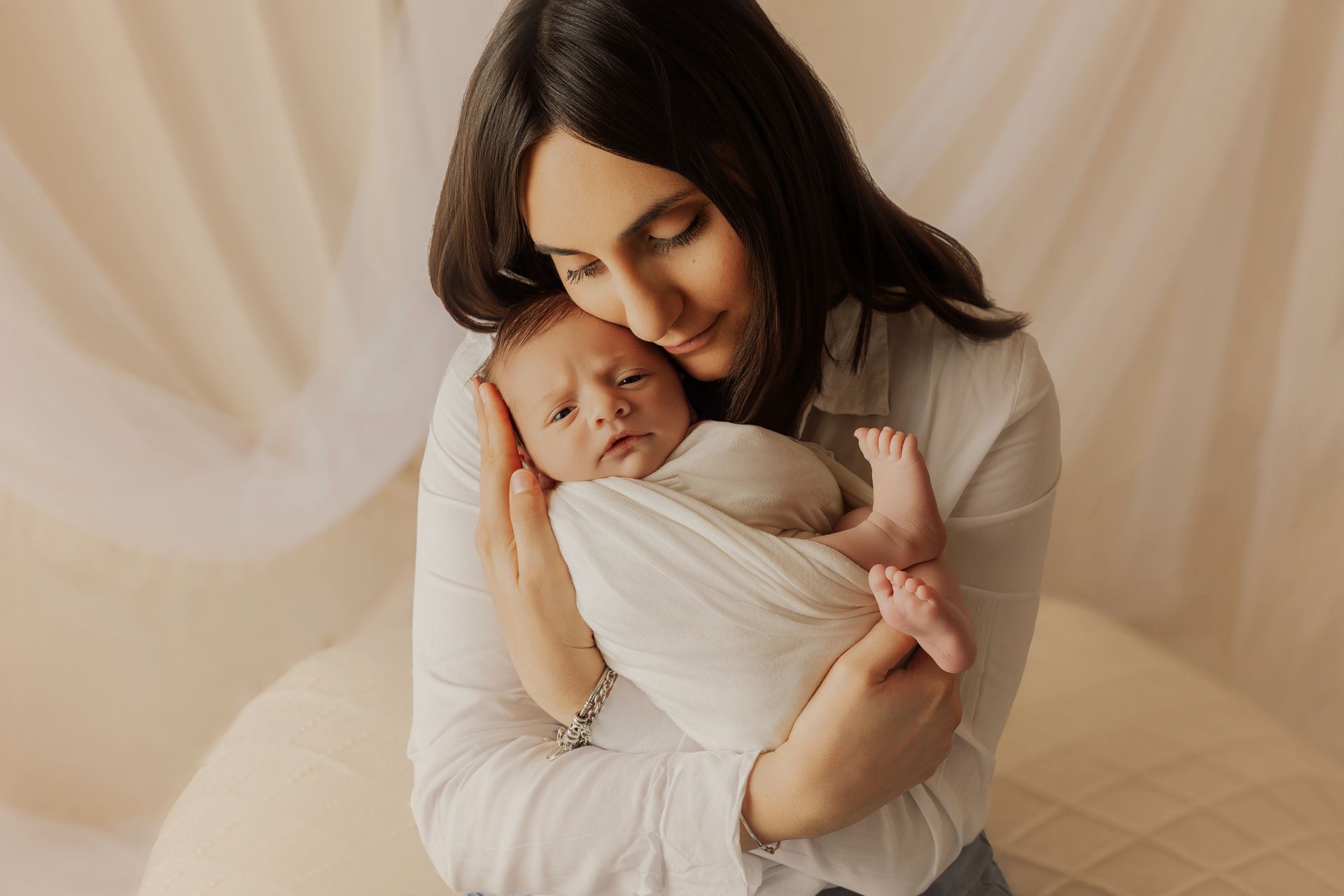
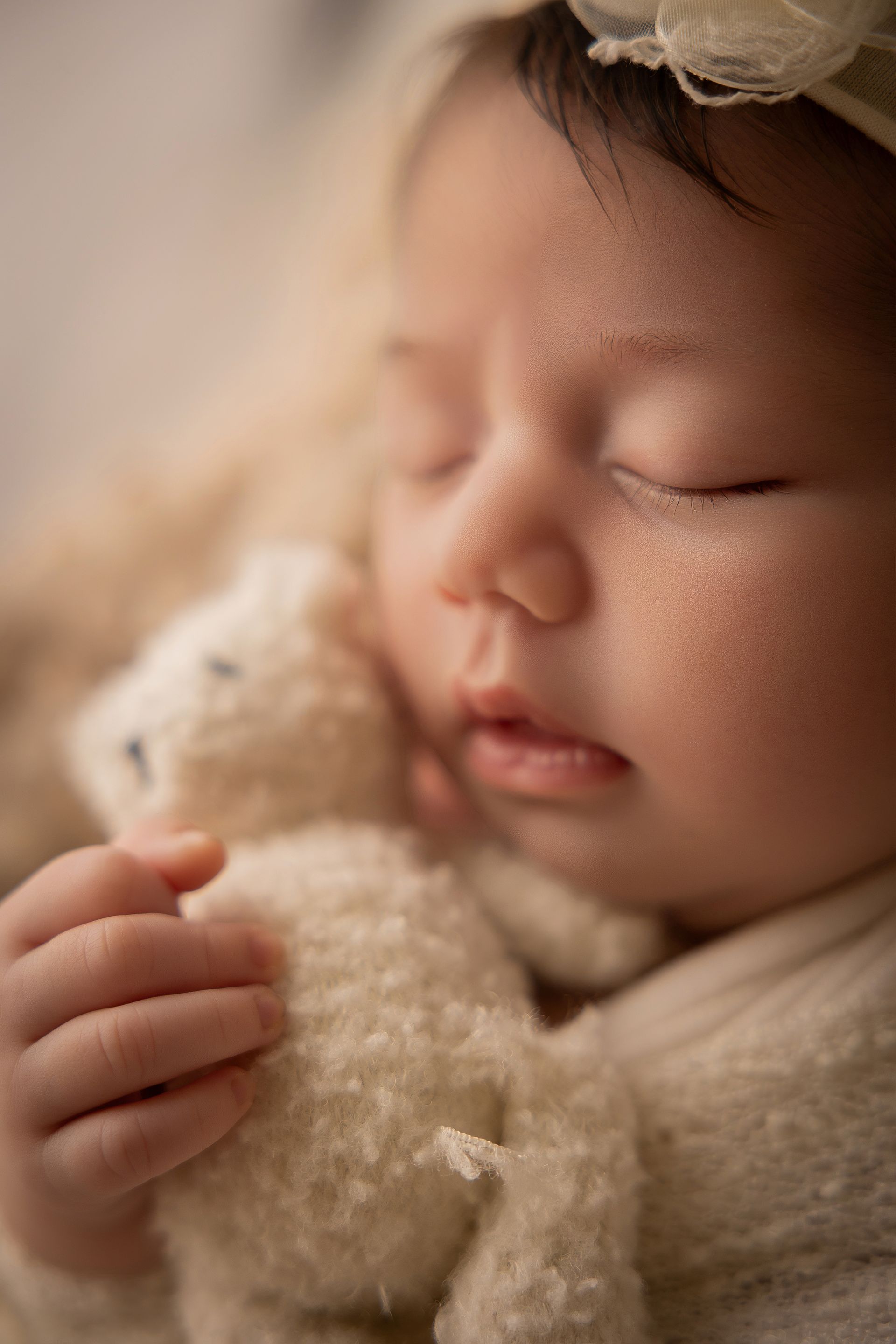
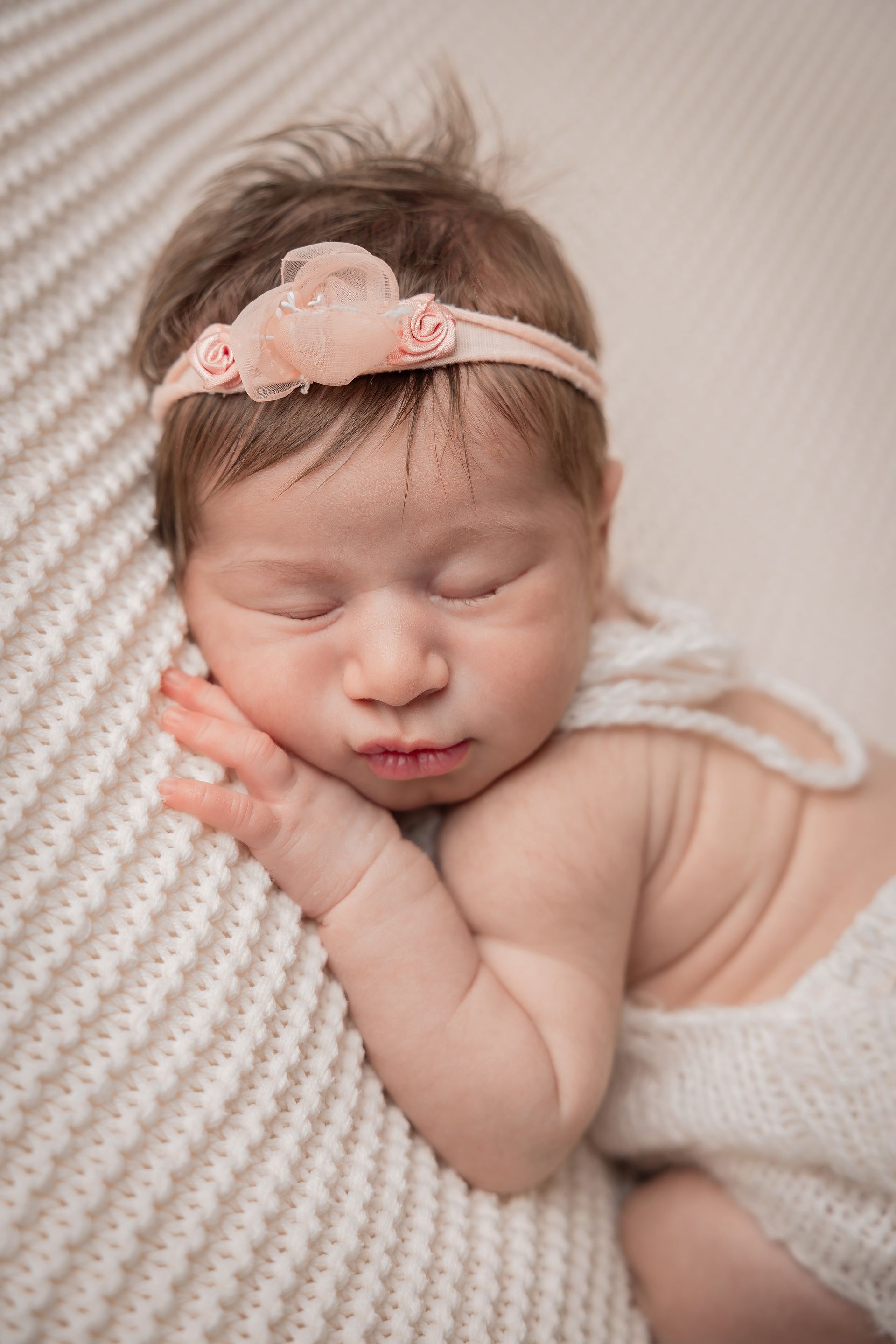
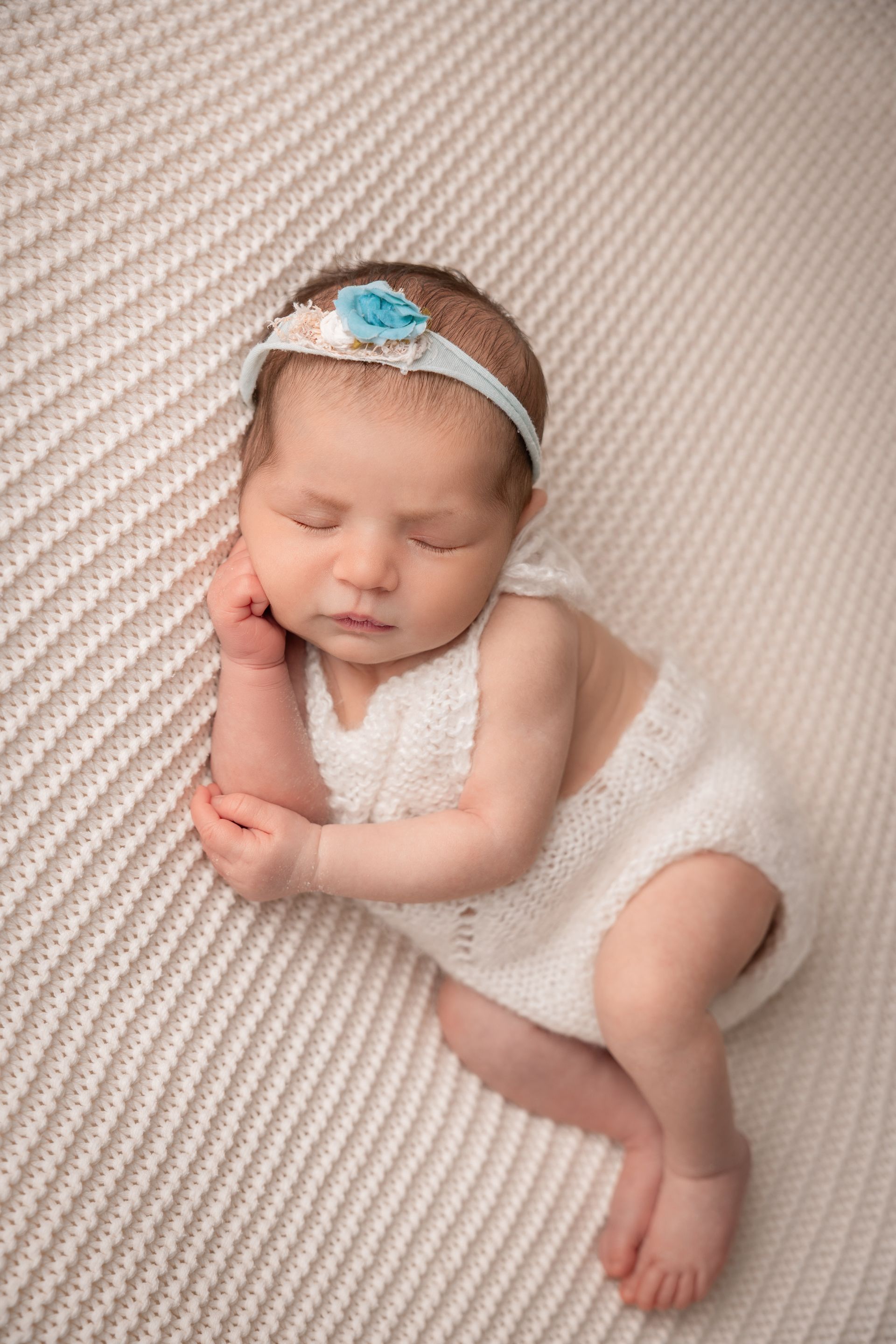
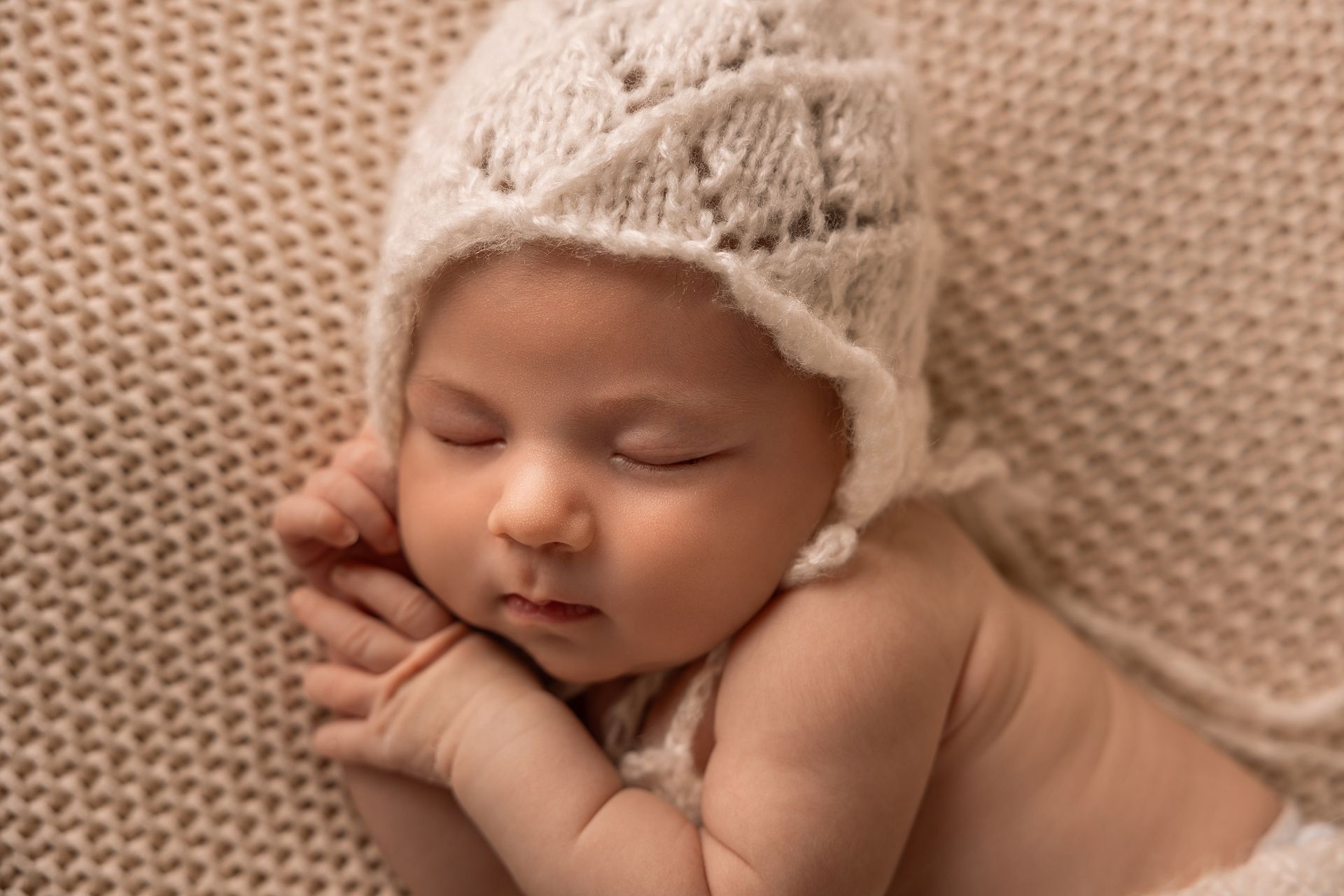
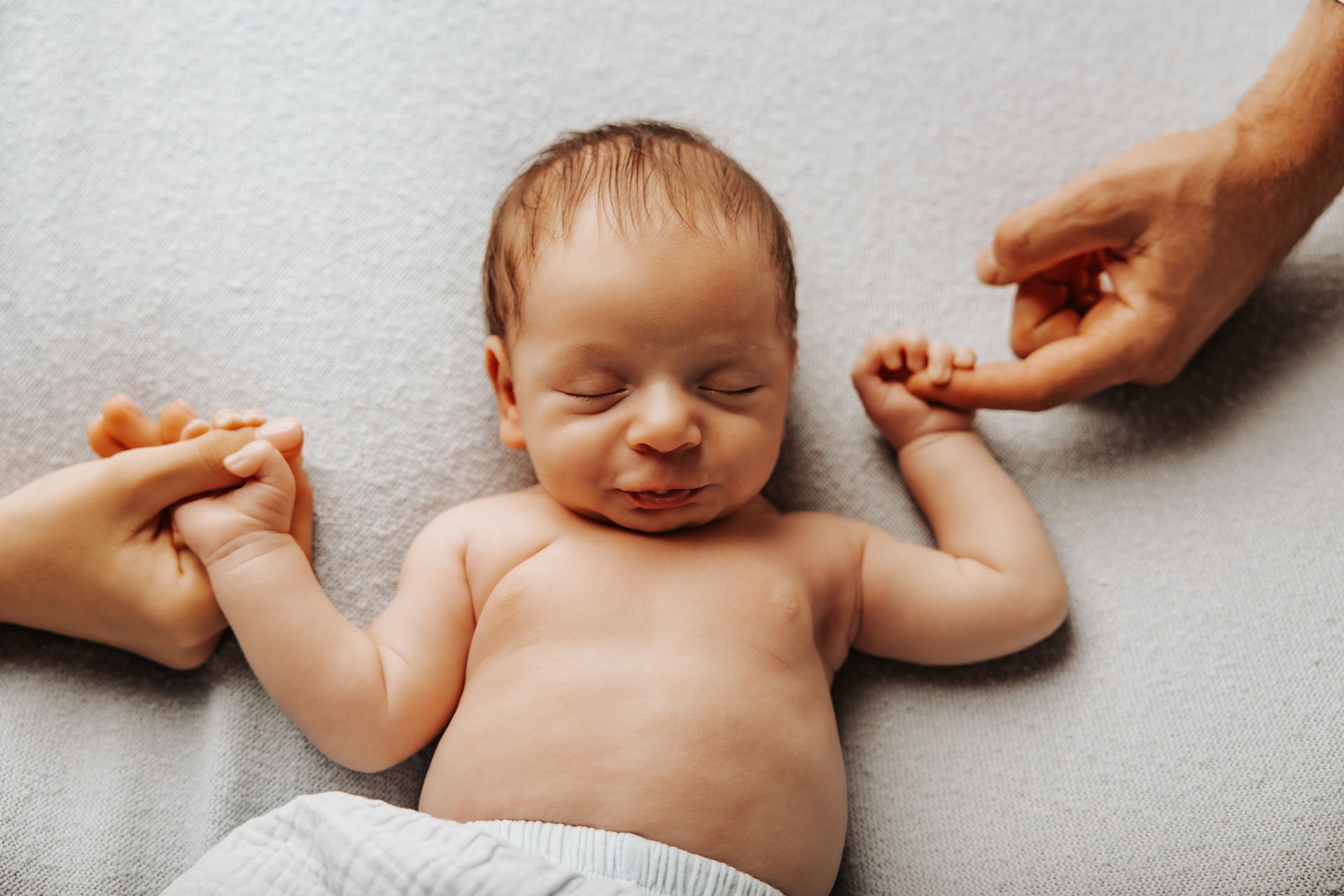
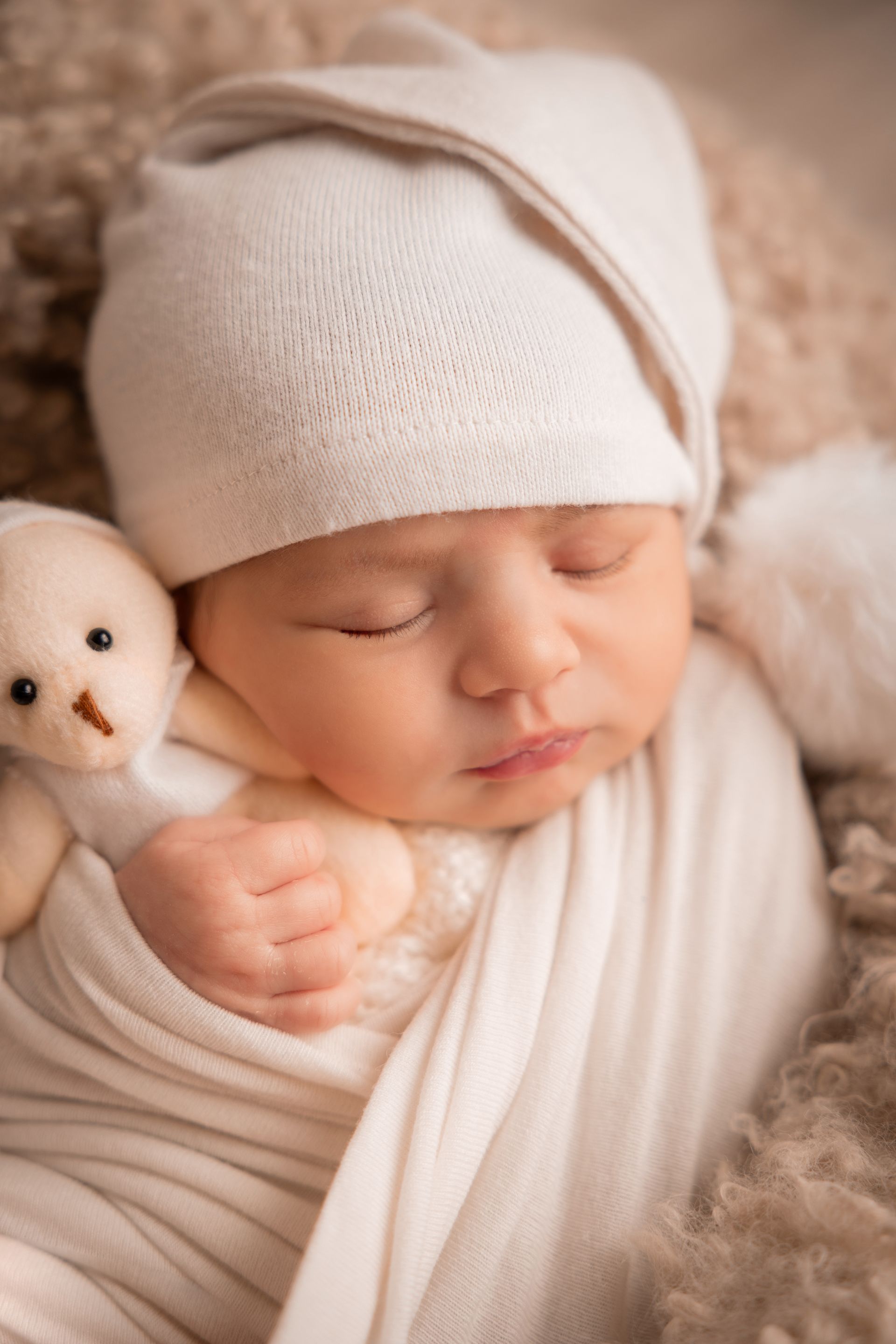
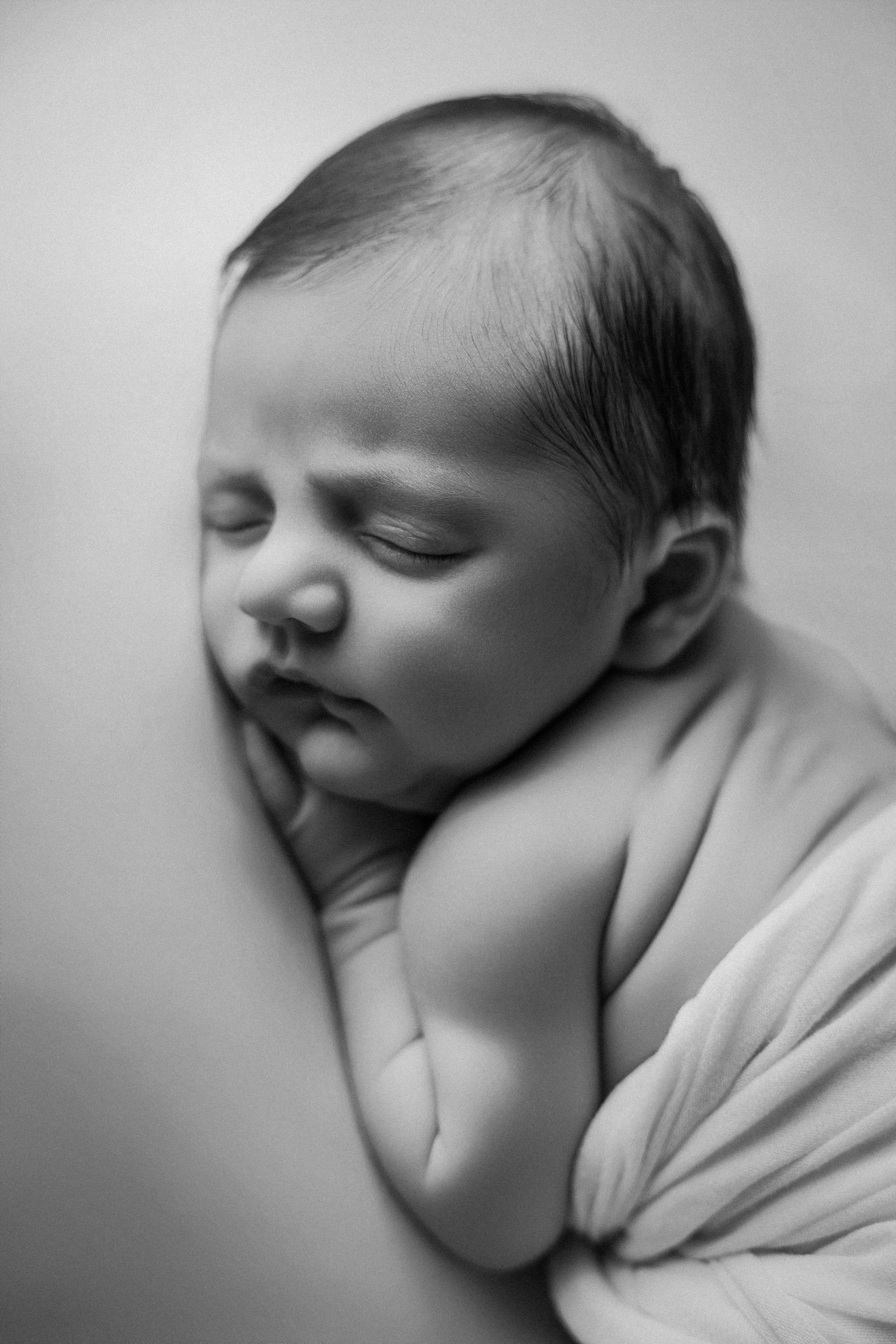
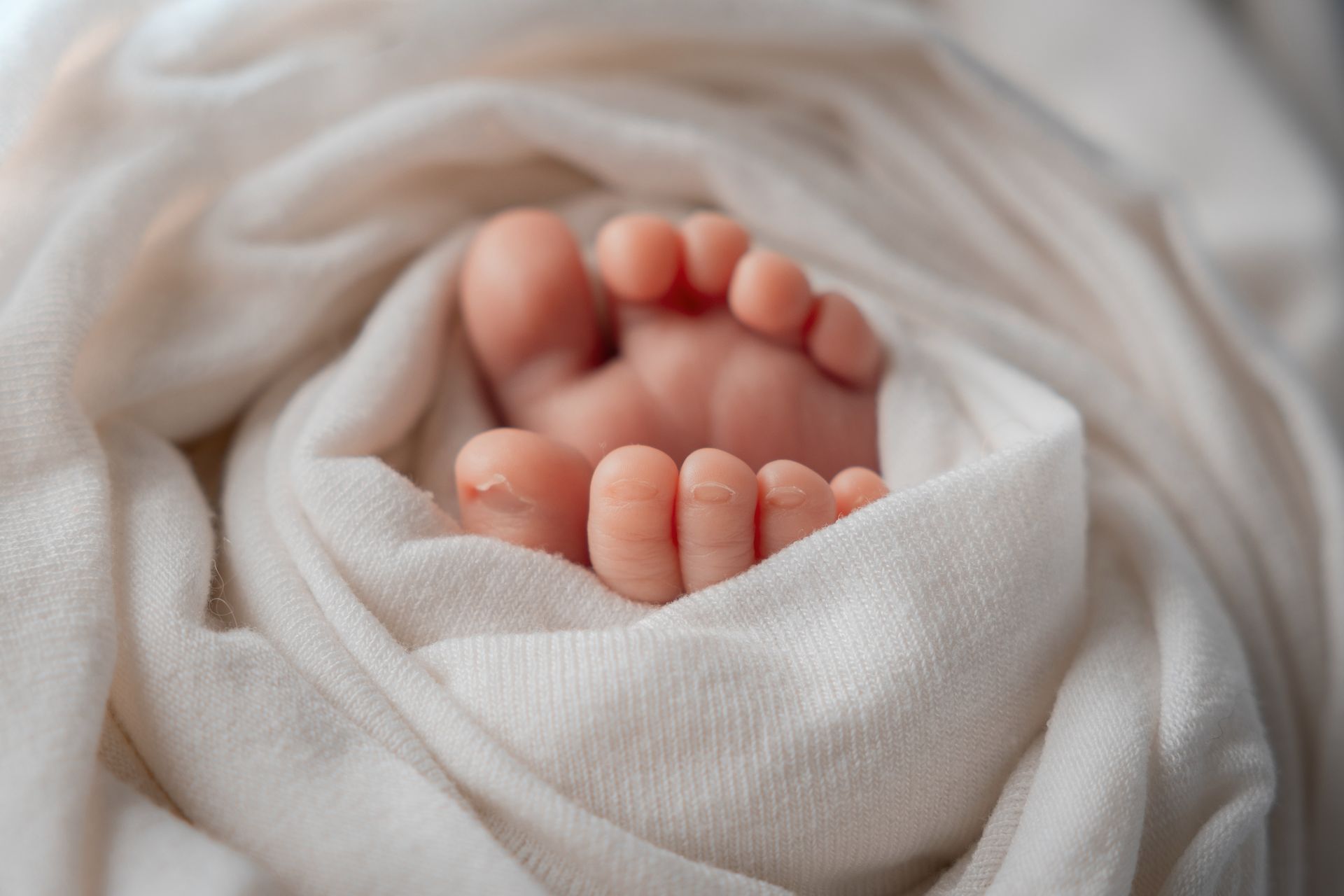
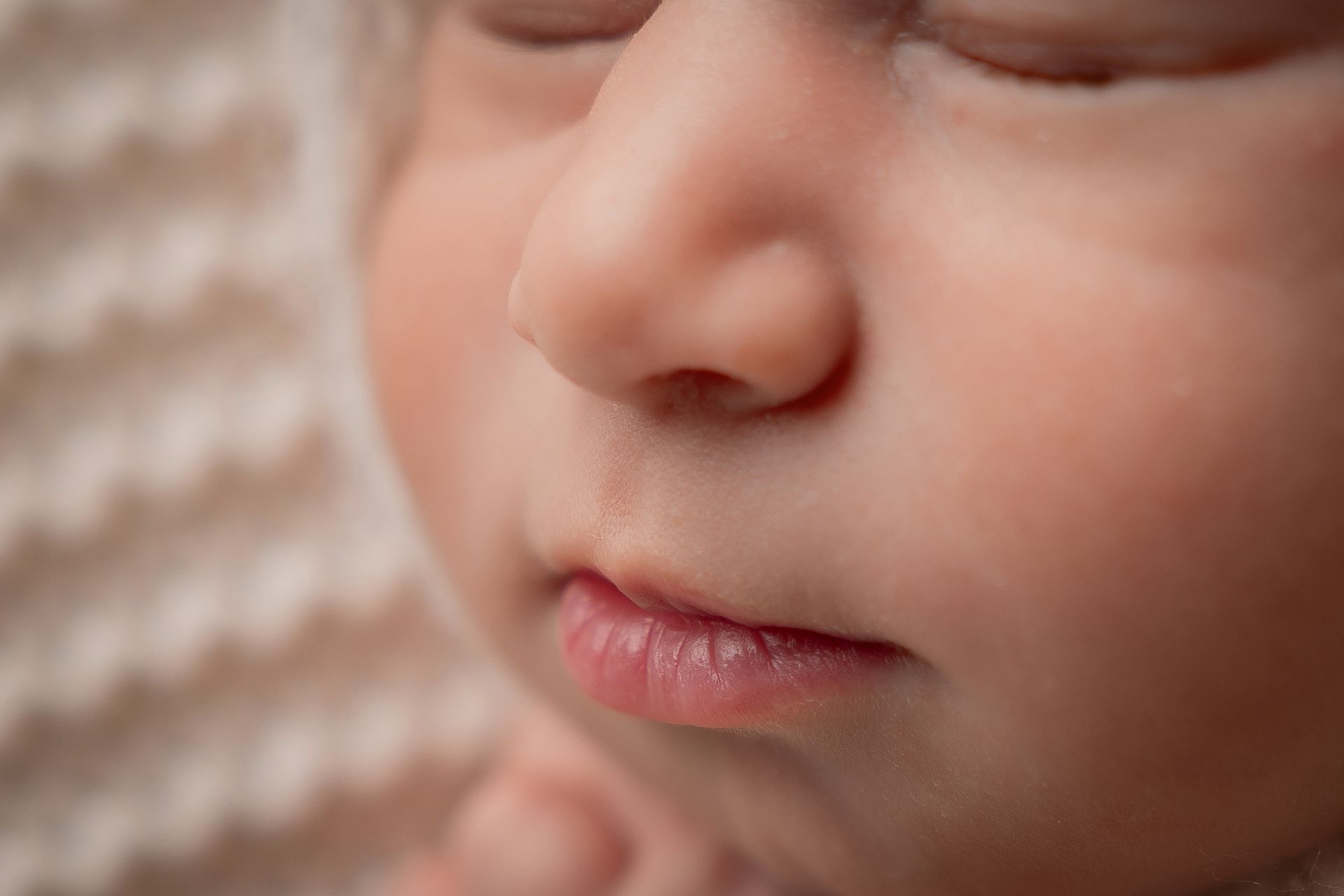
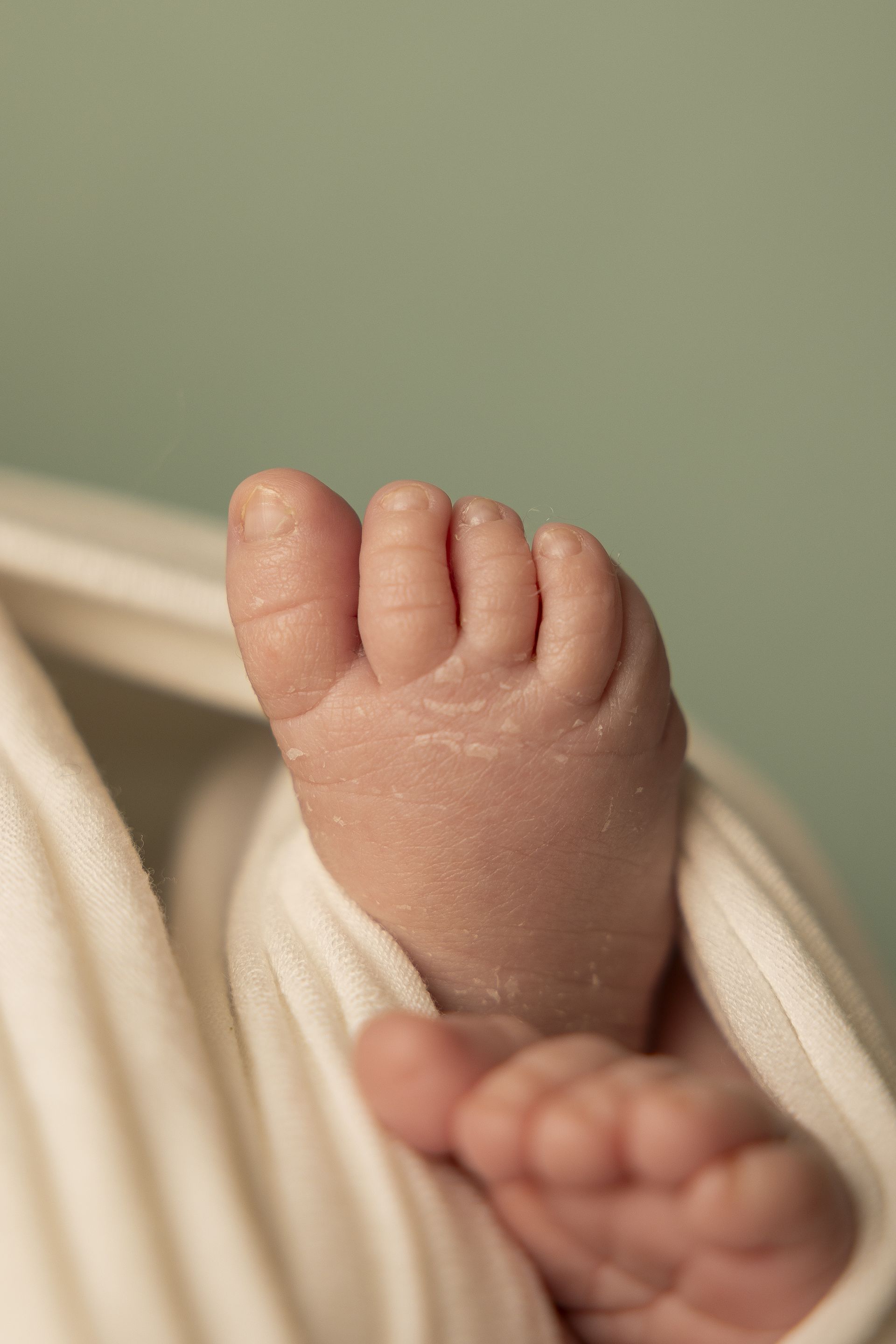
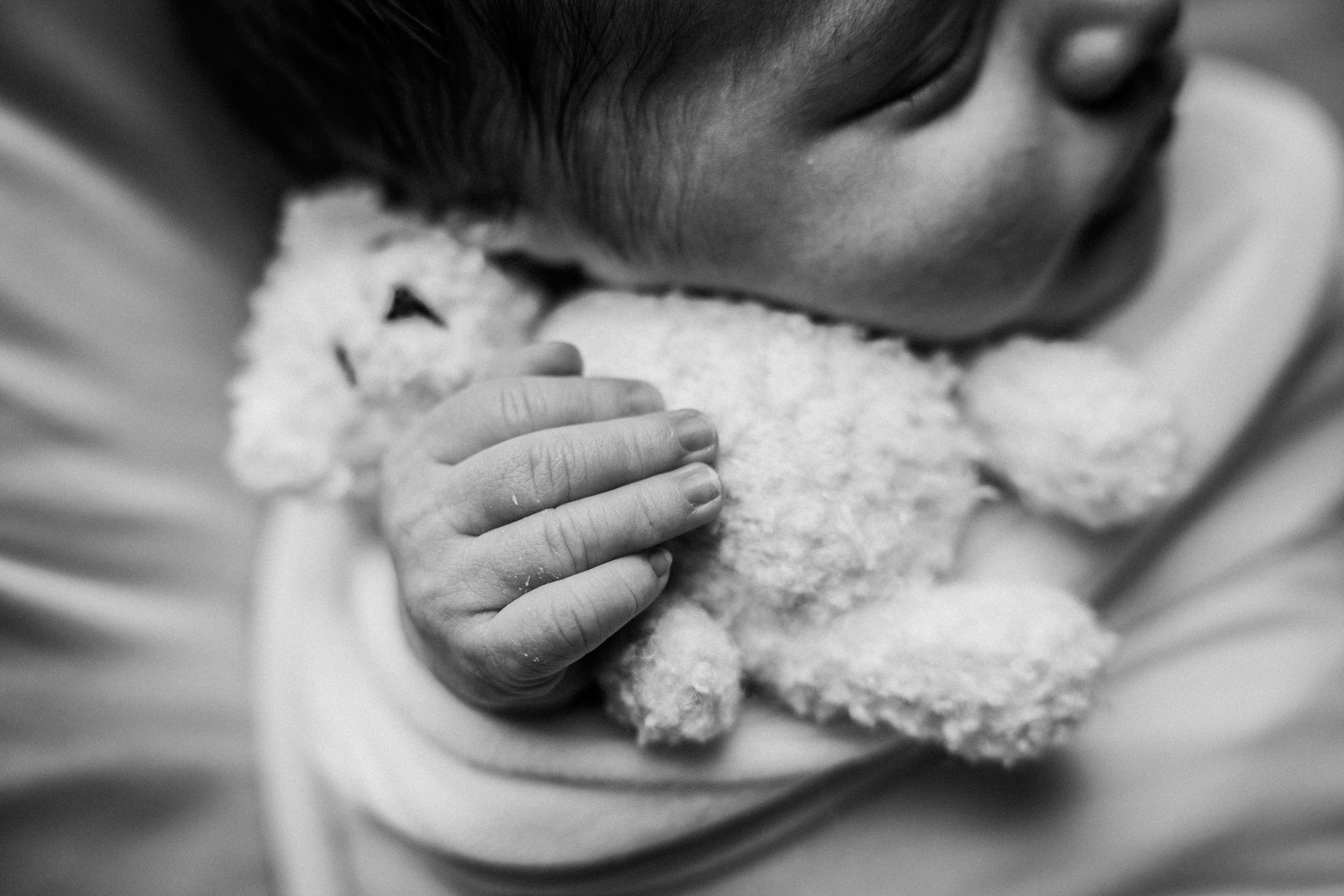
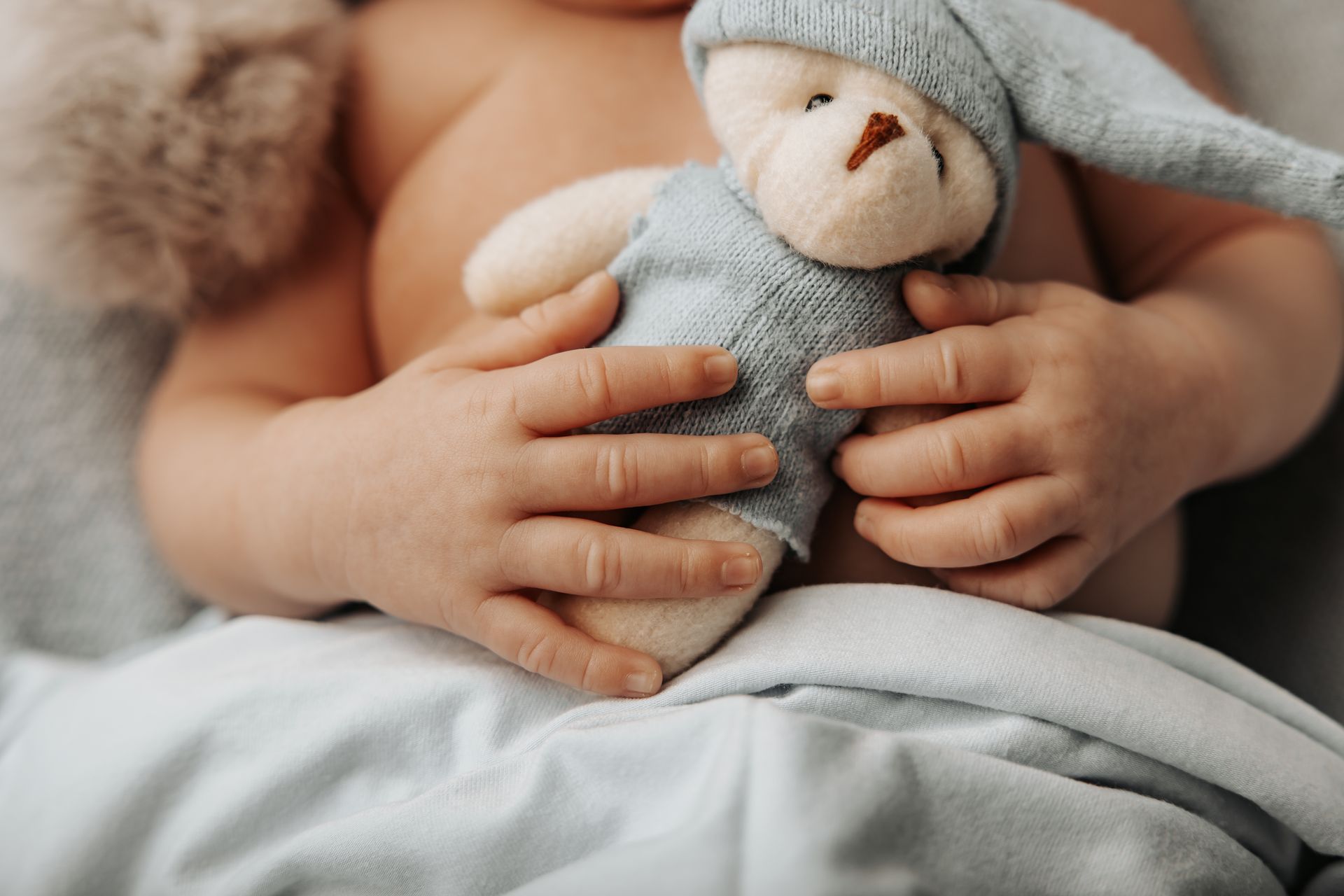
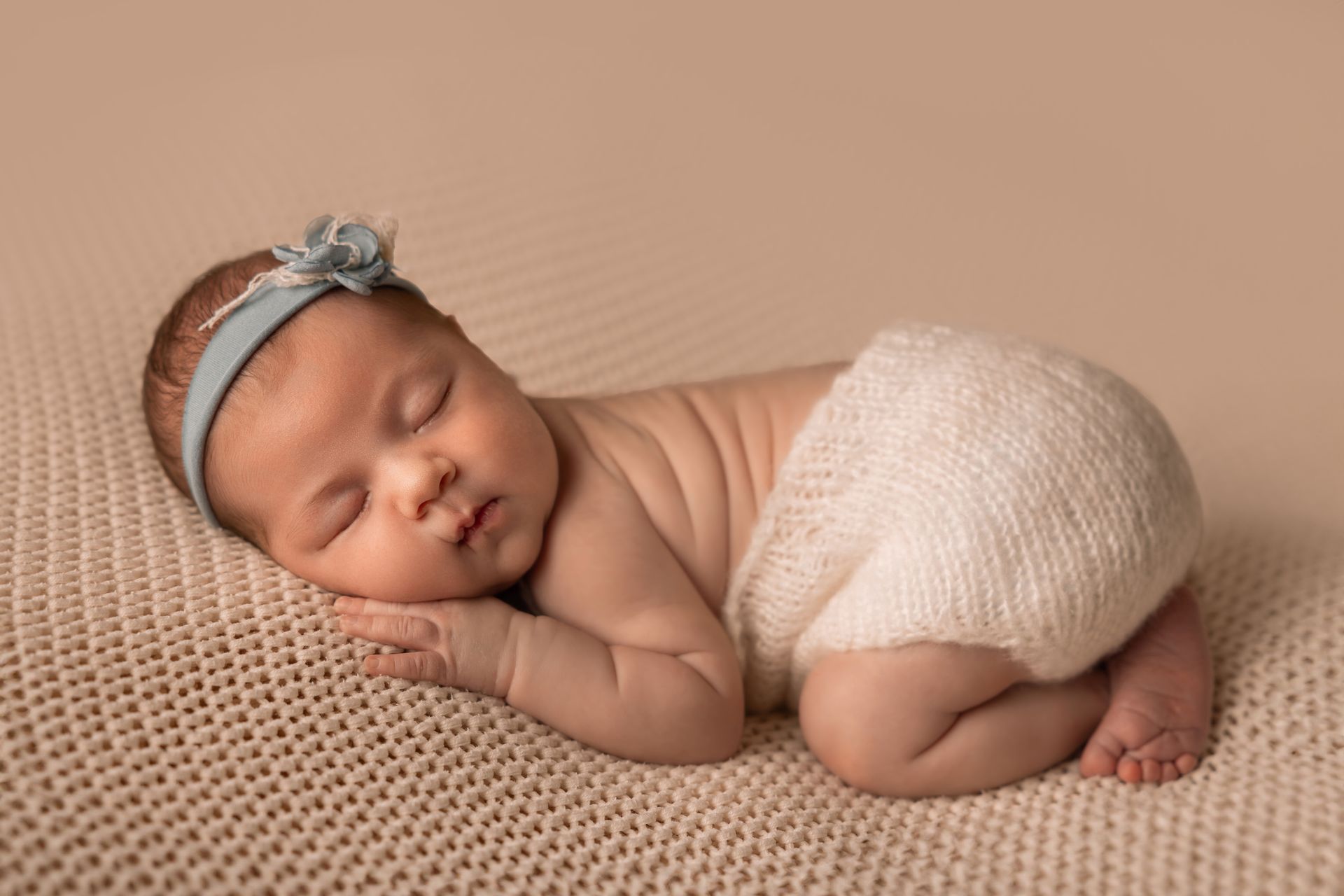
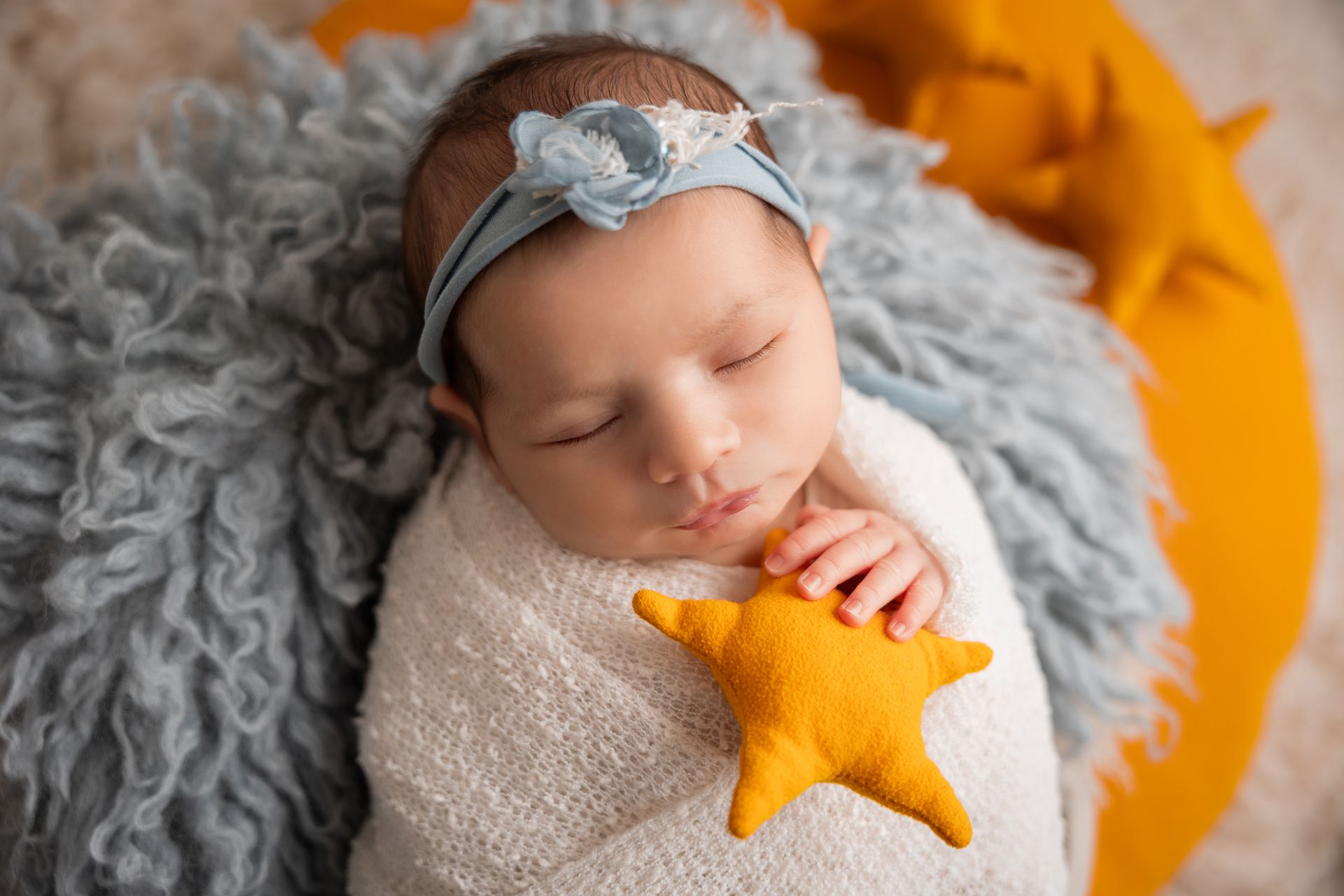
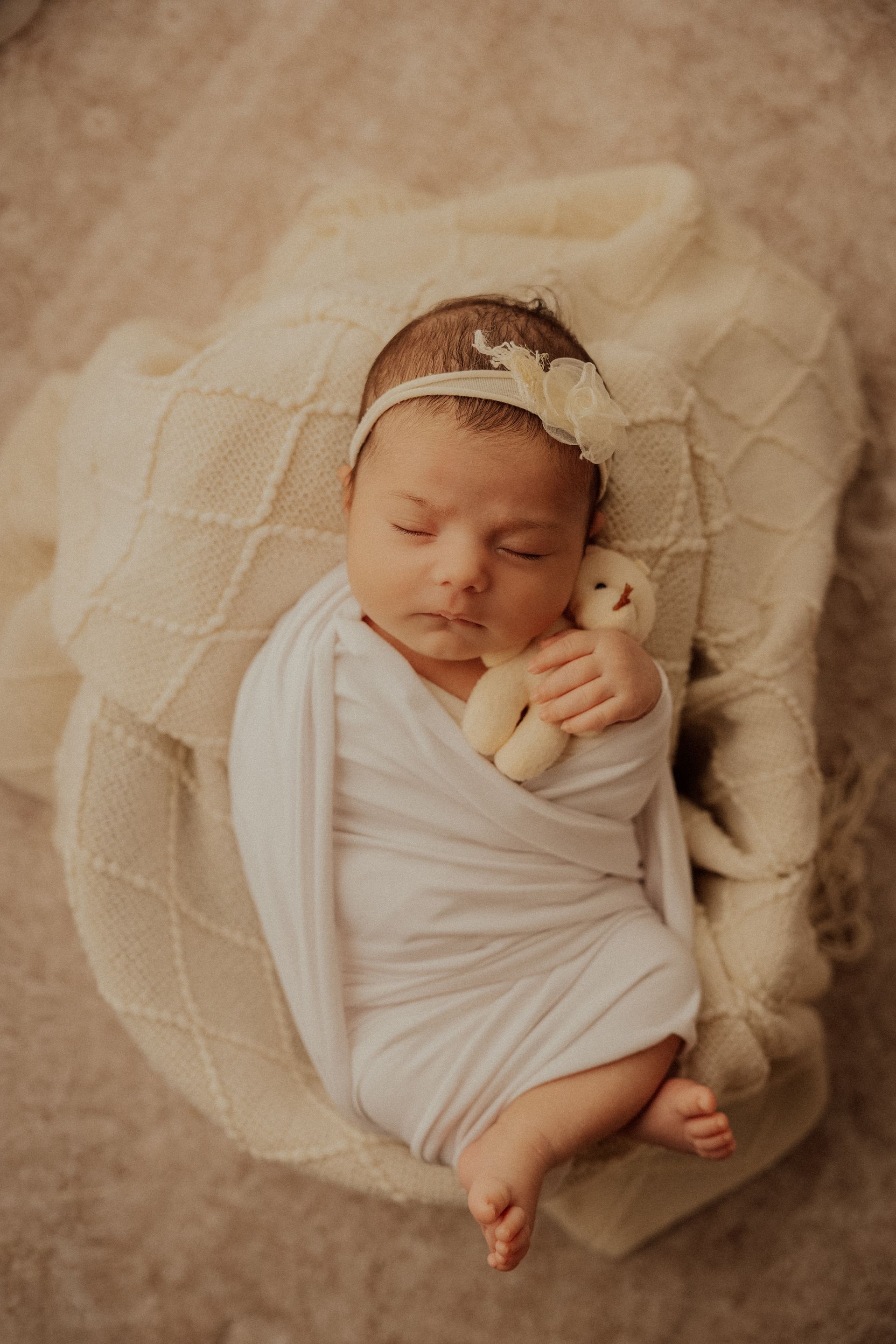
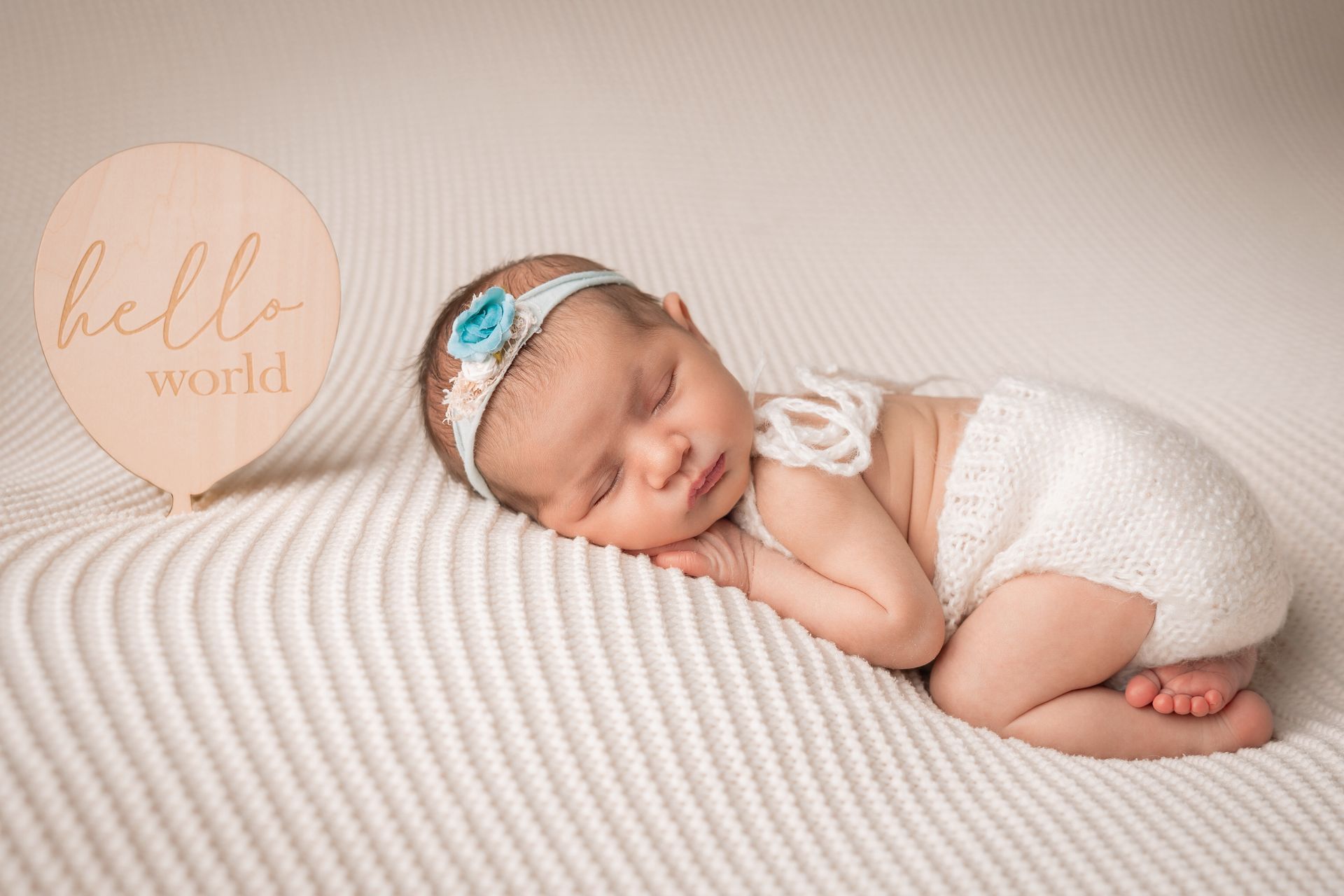
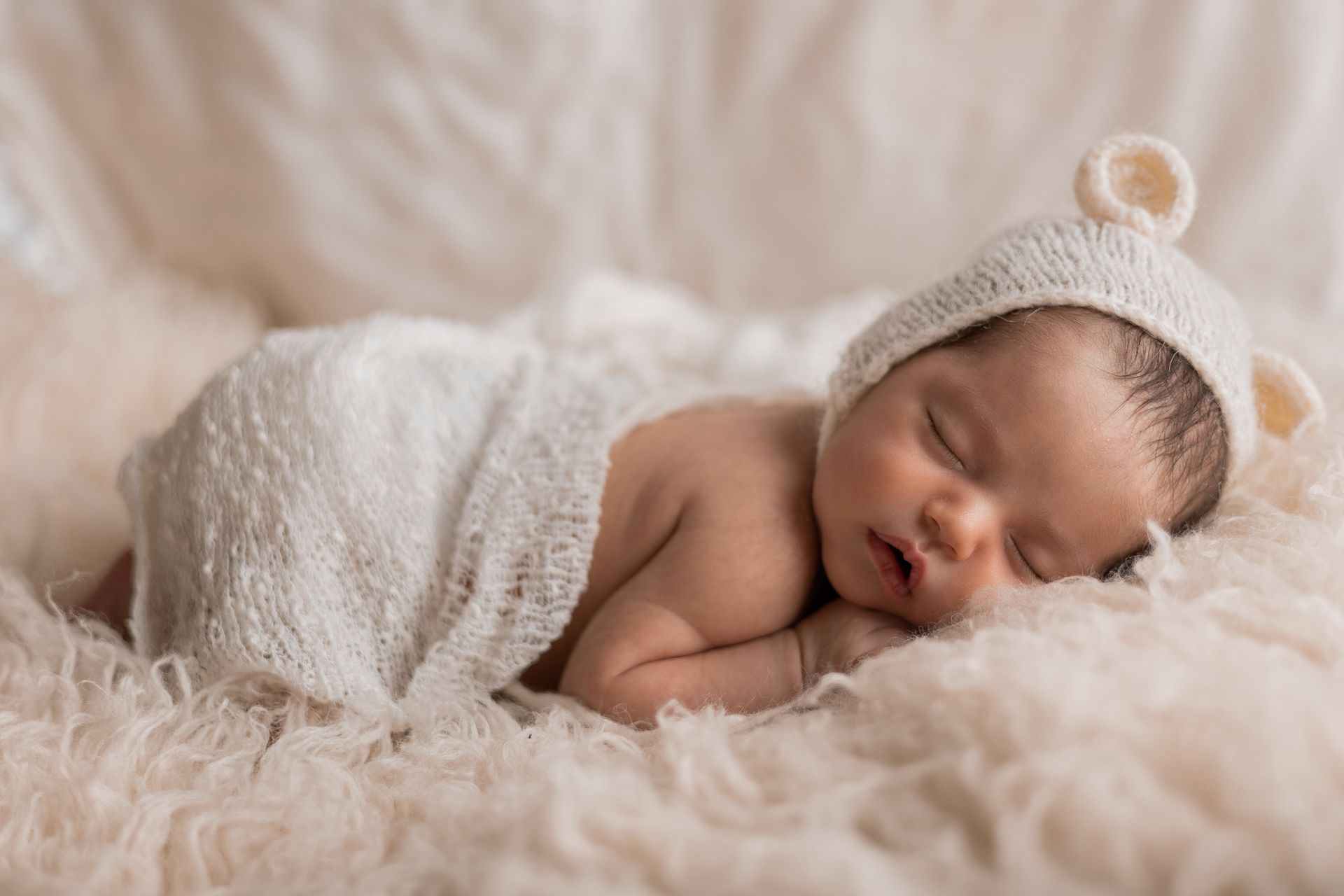
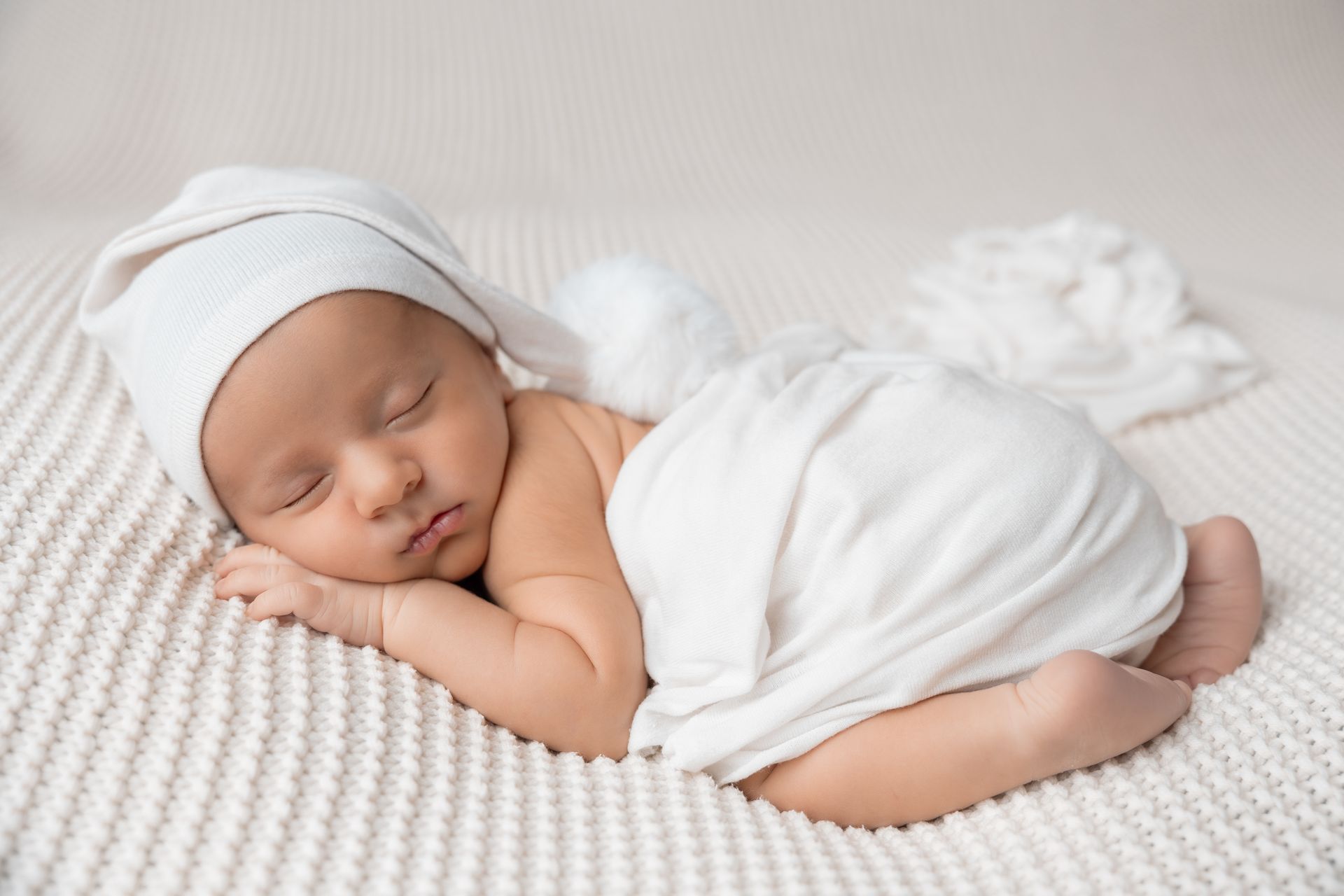
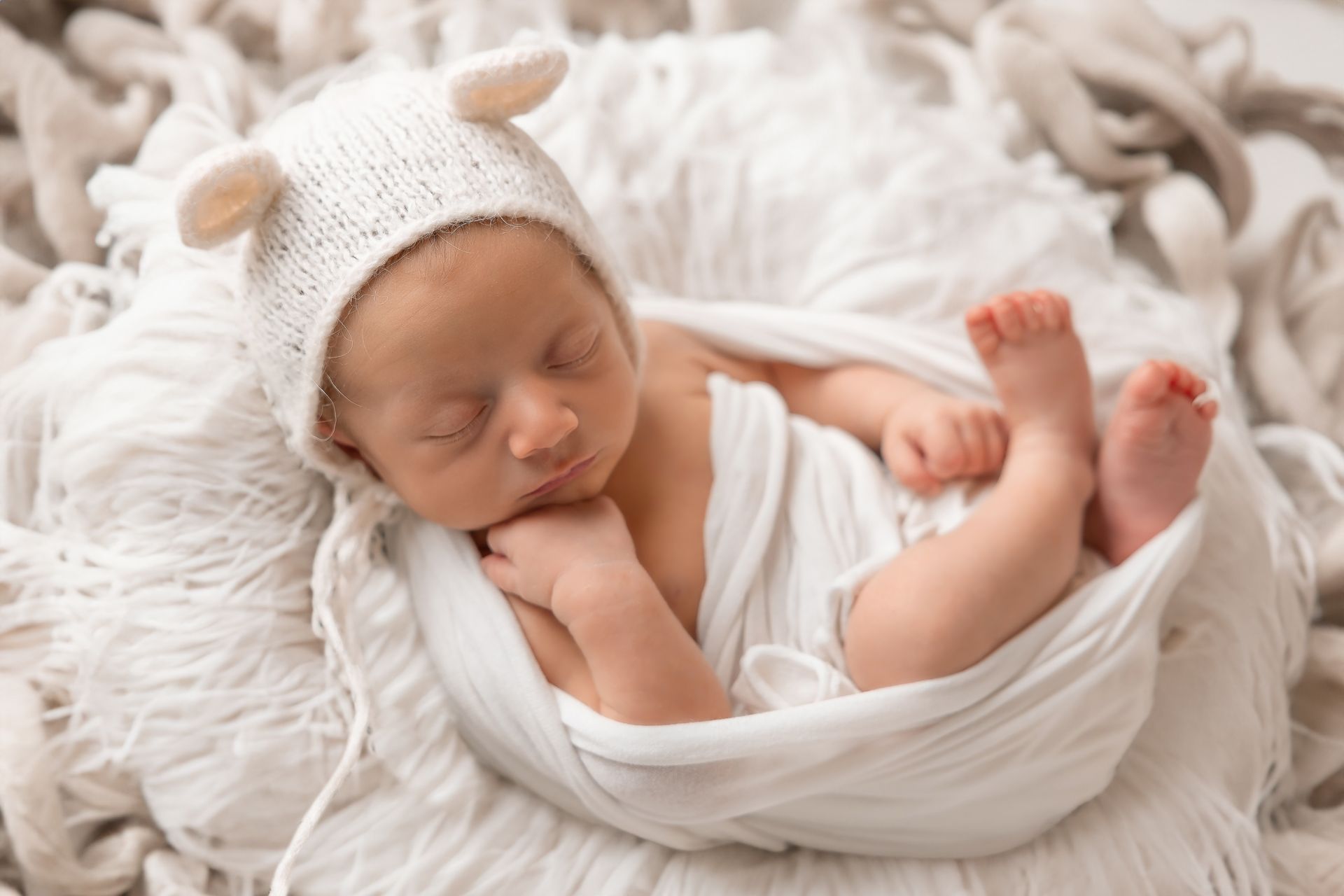
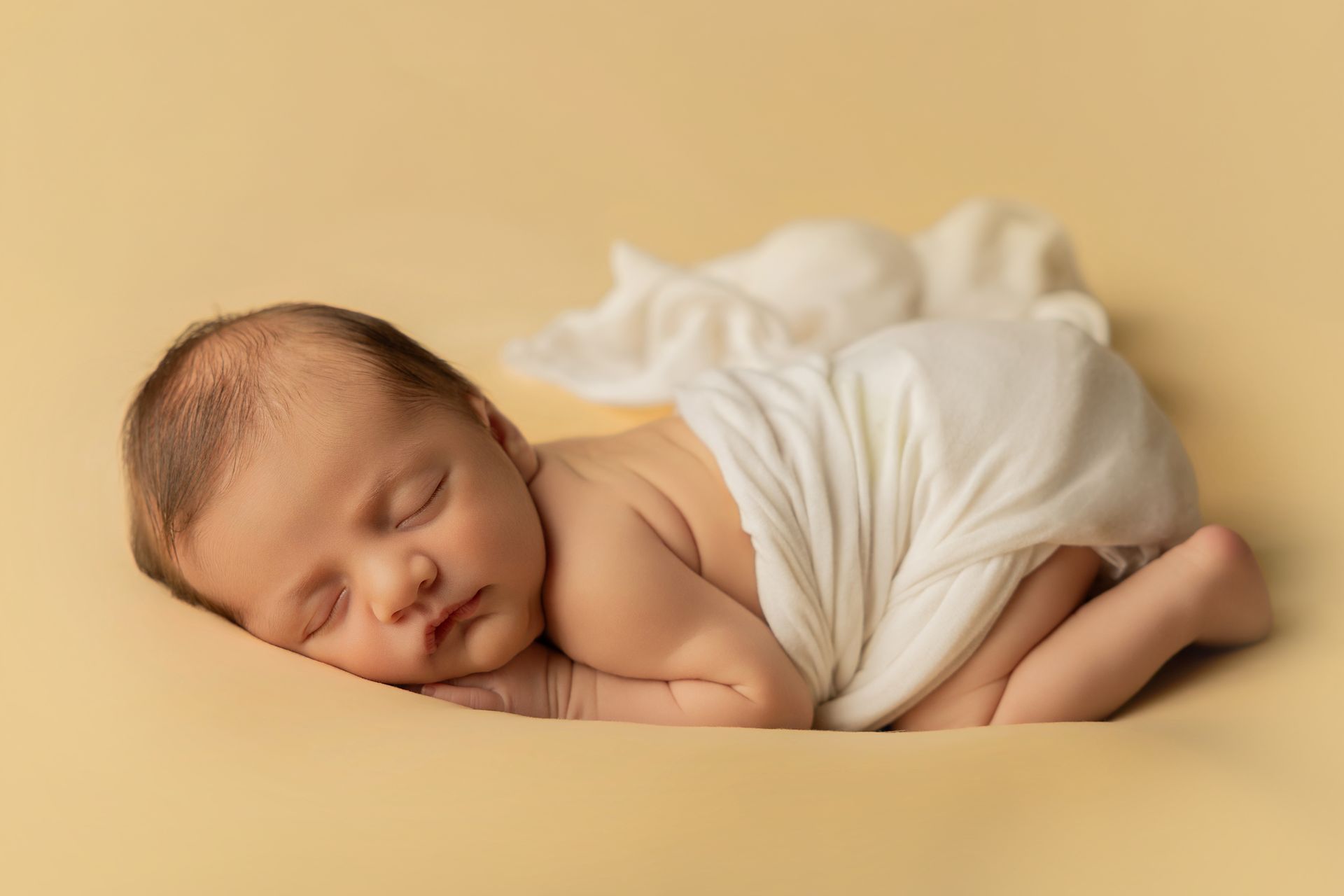
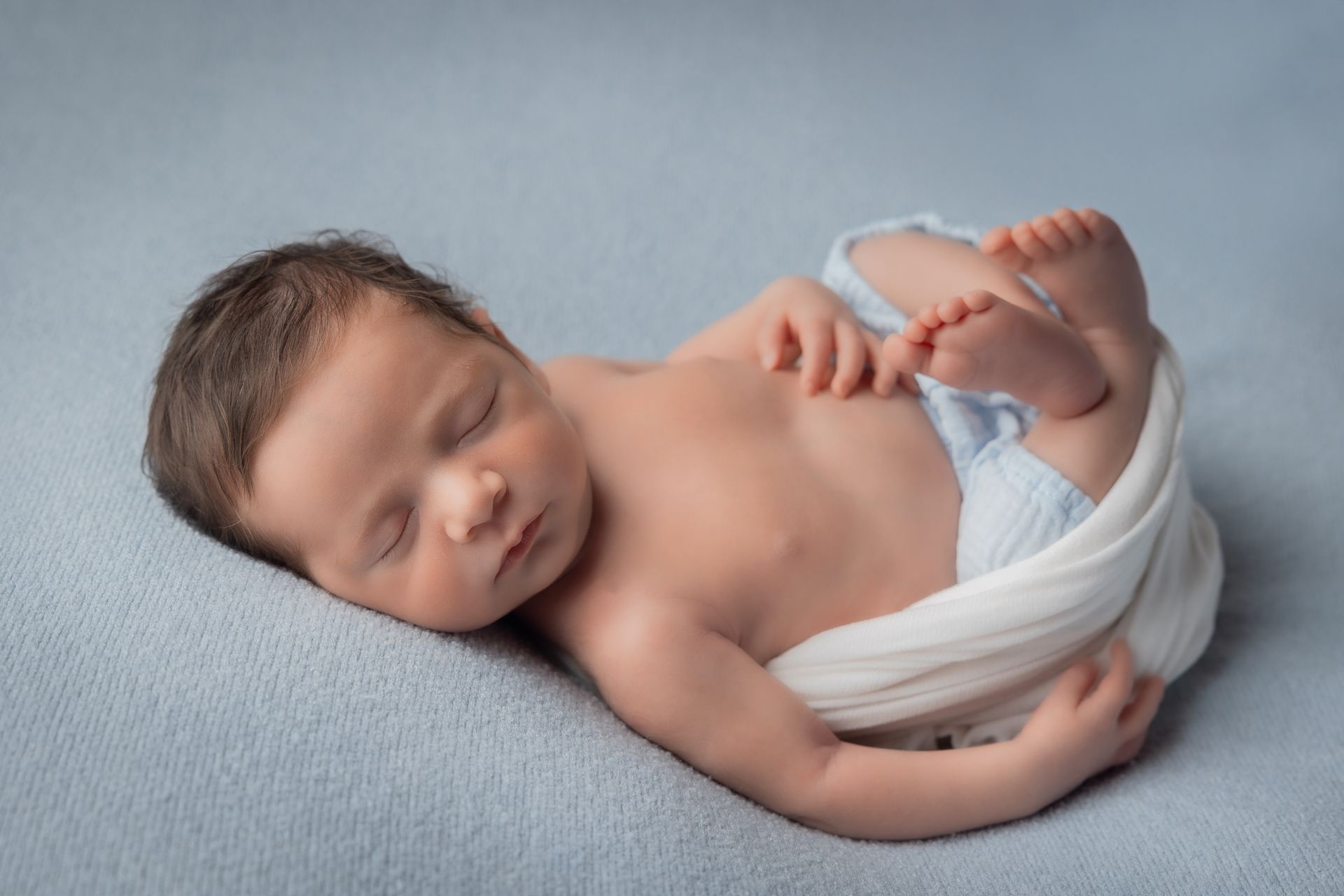
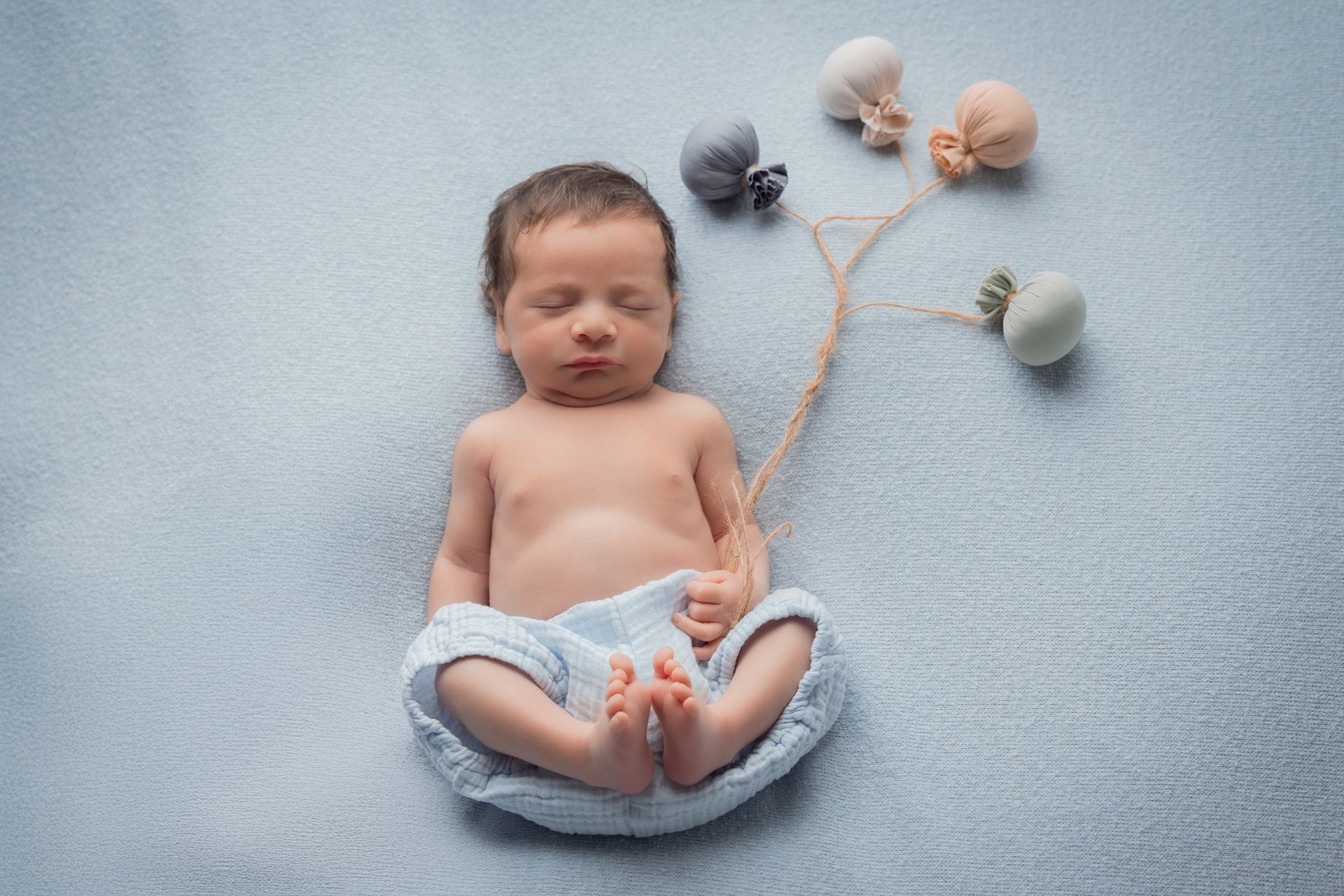
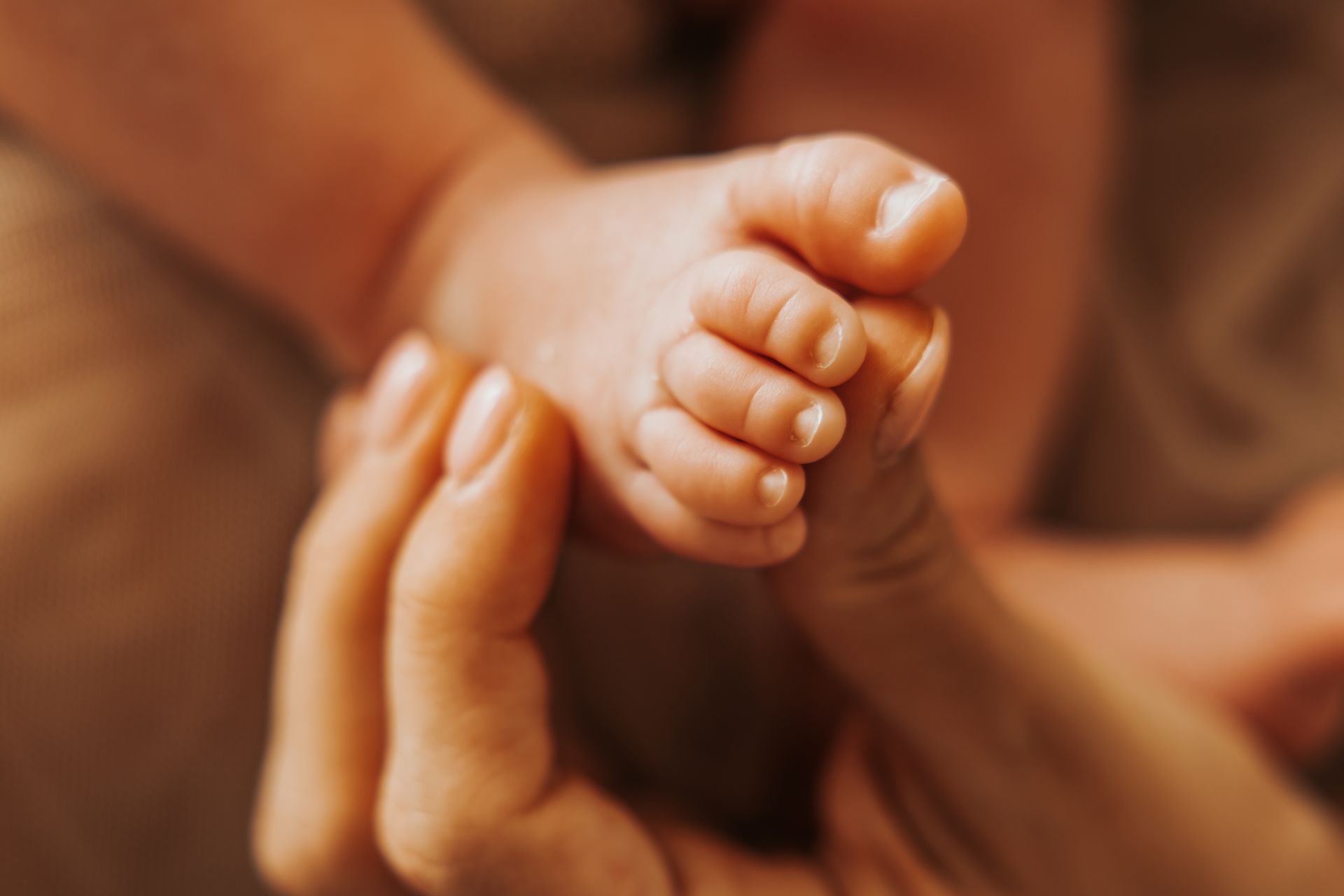
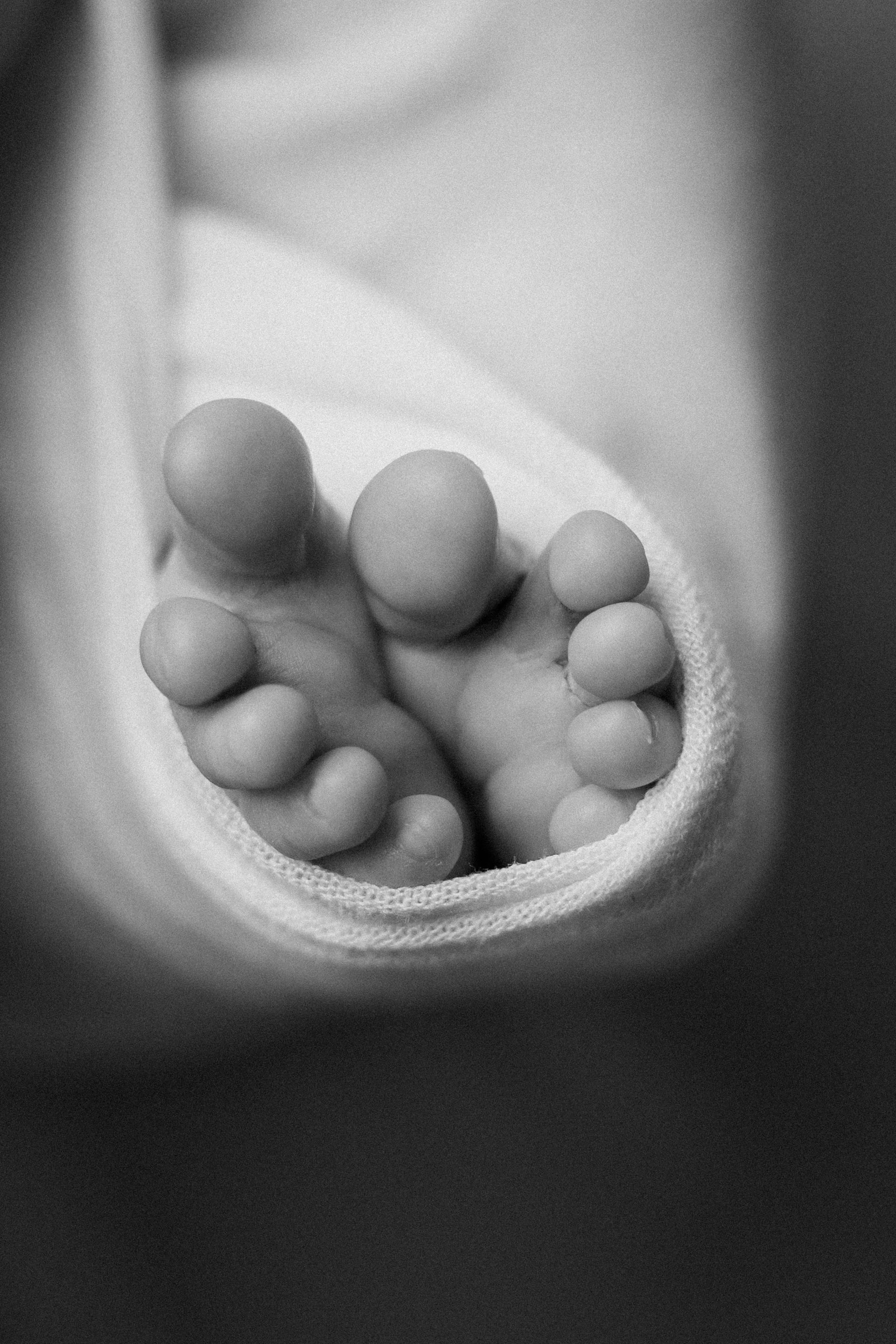
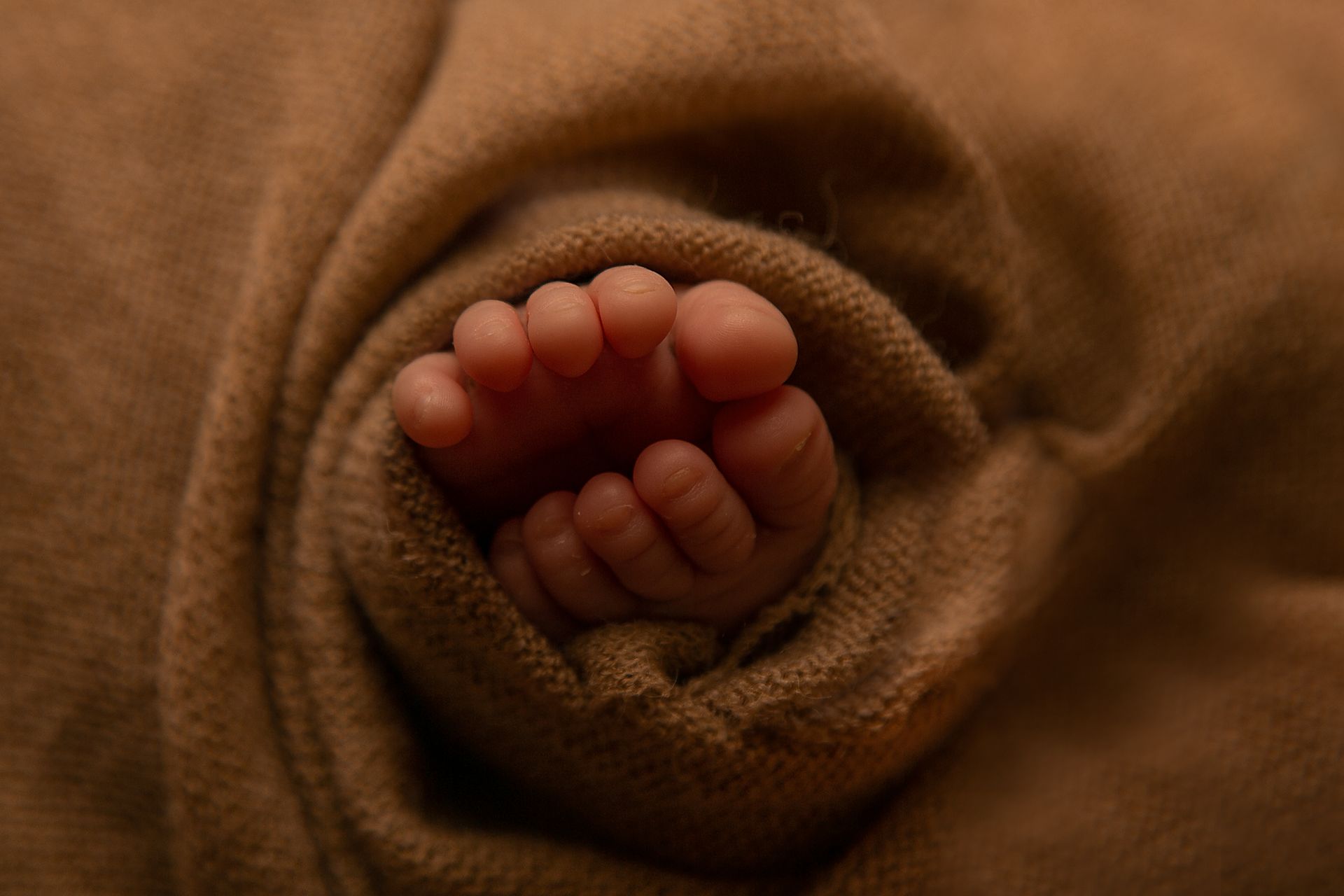
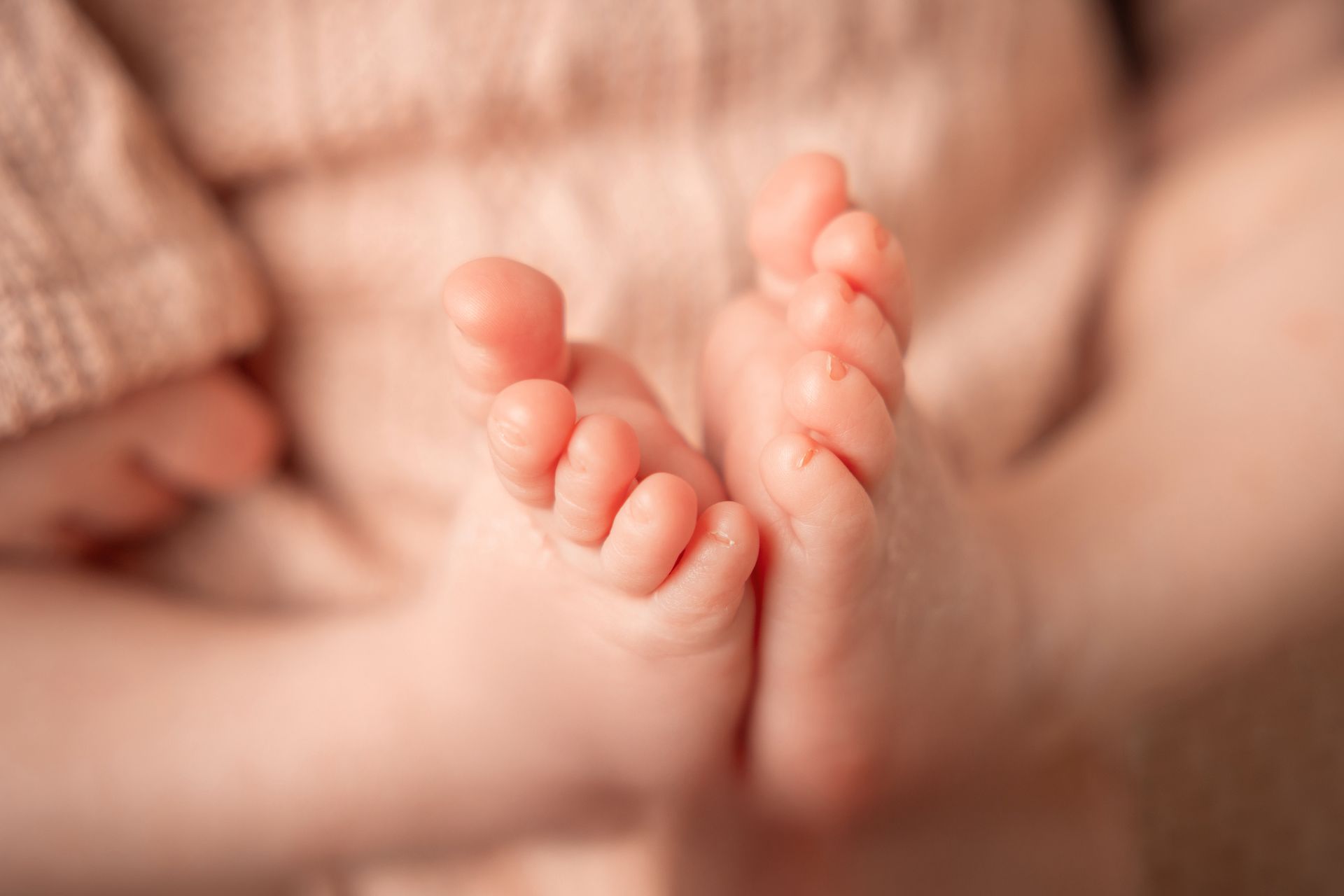
Newborns photographed in the first days of life. The wraps, baskets and backdrops are the studio's own, and in every composed shot there is a hand holding them, mine or a parent's, inside or outside the frame.
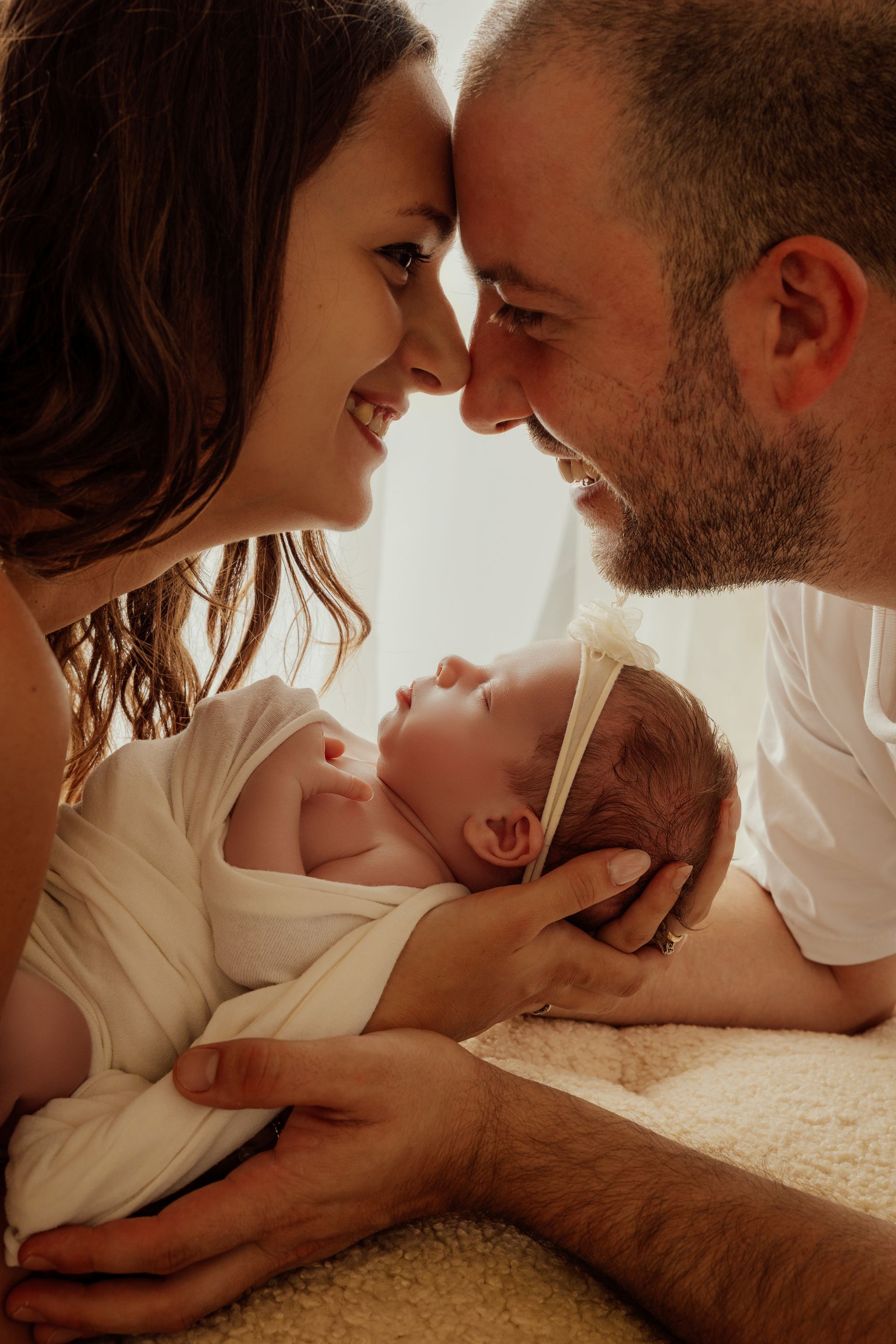
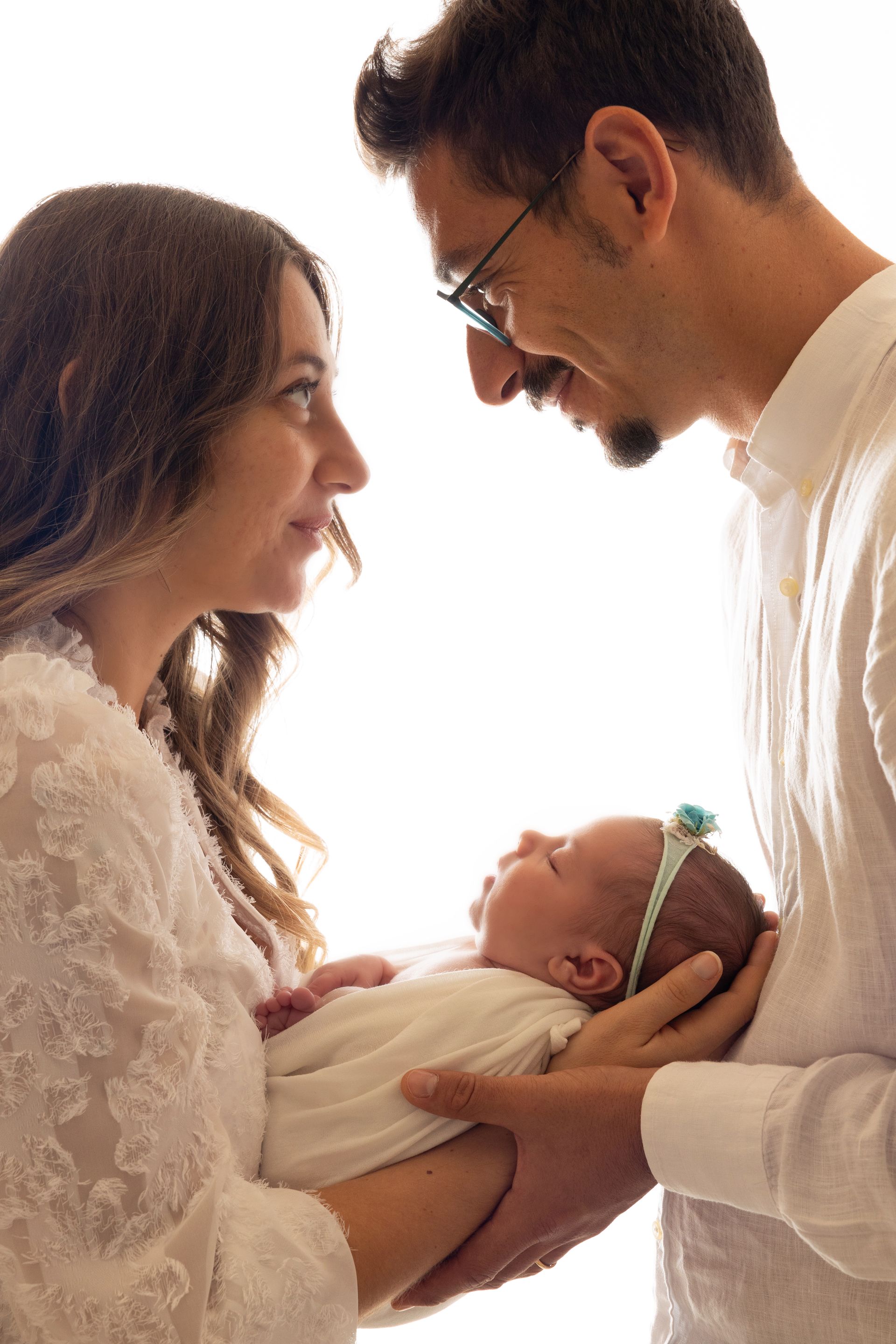
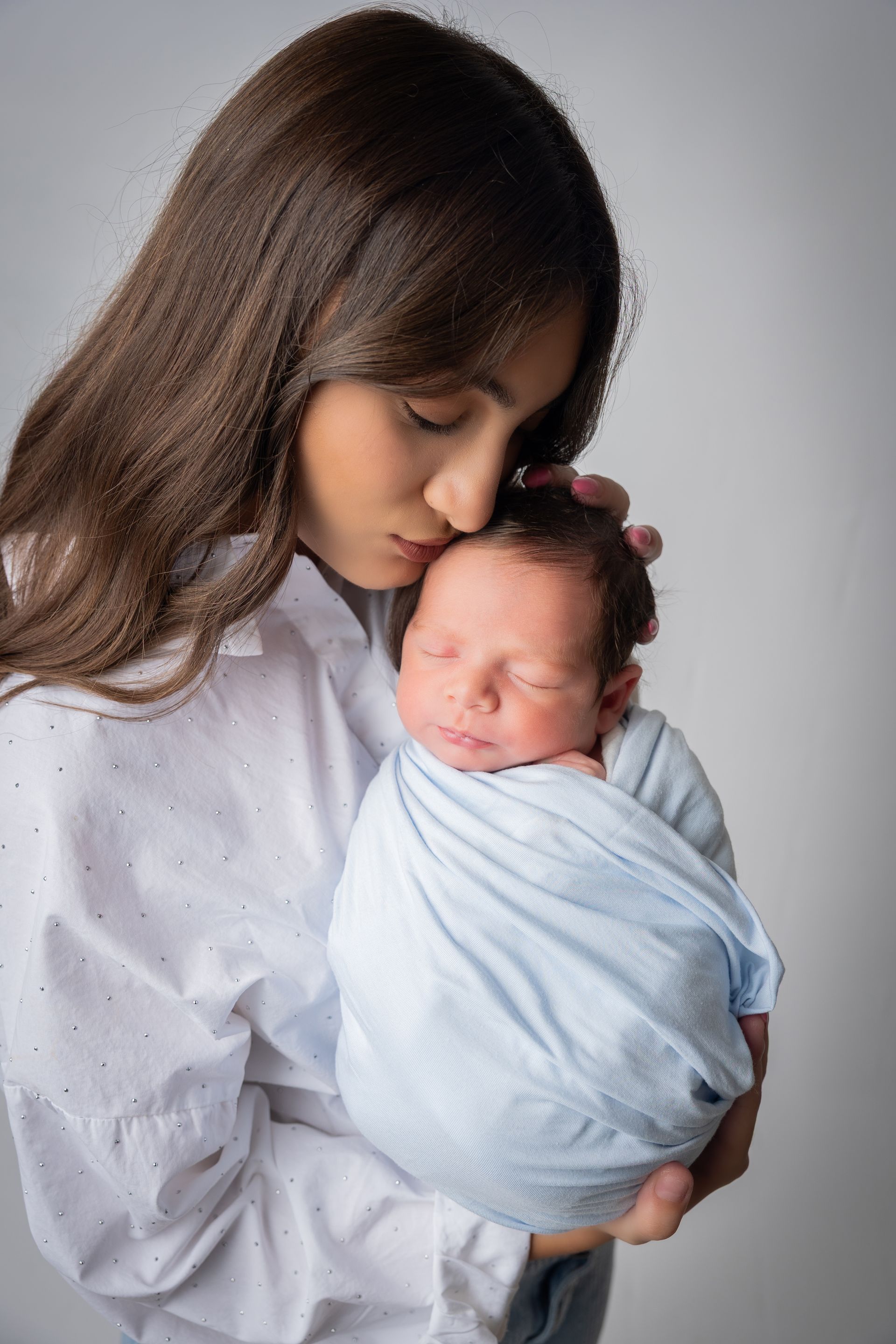

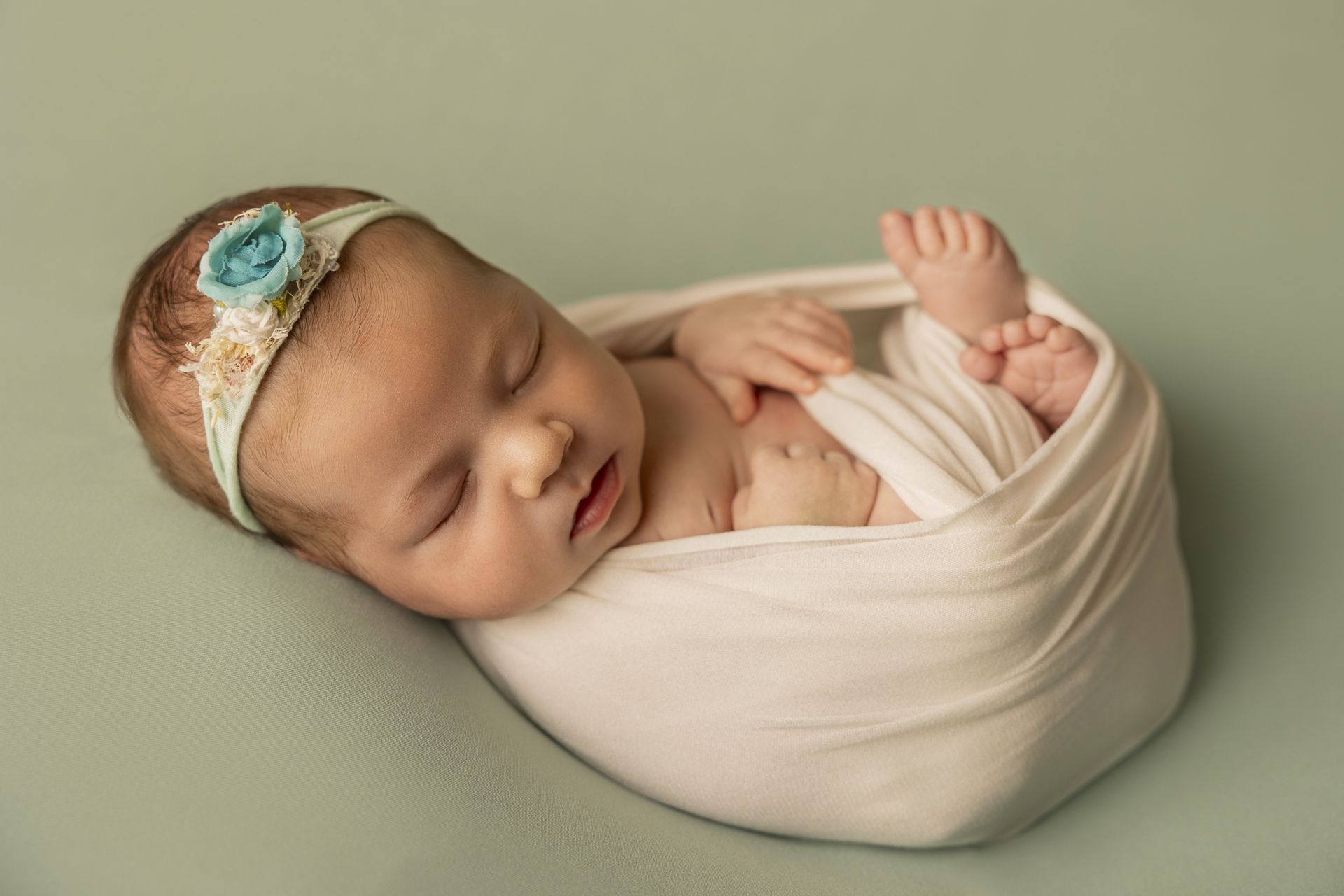
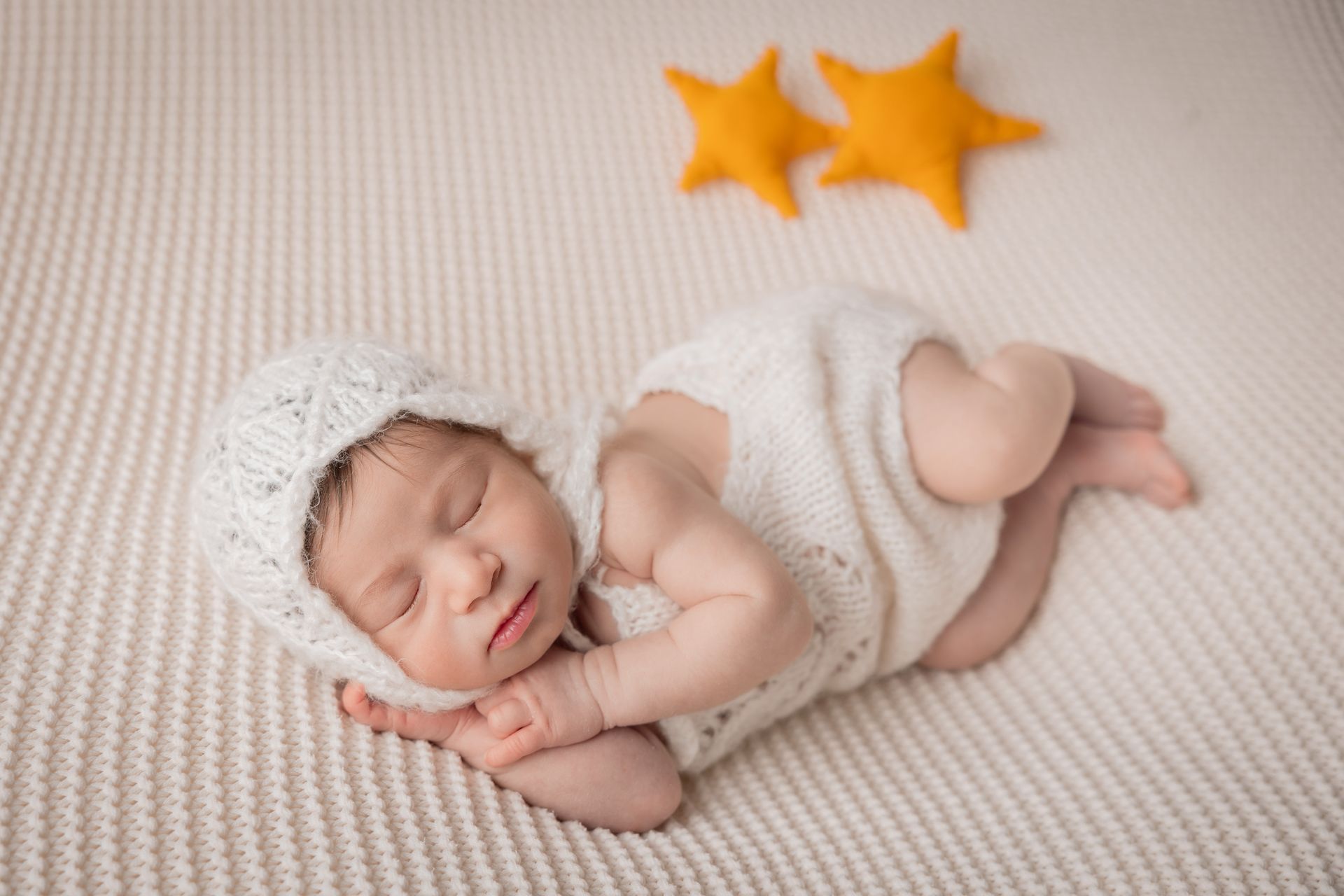
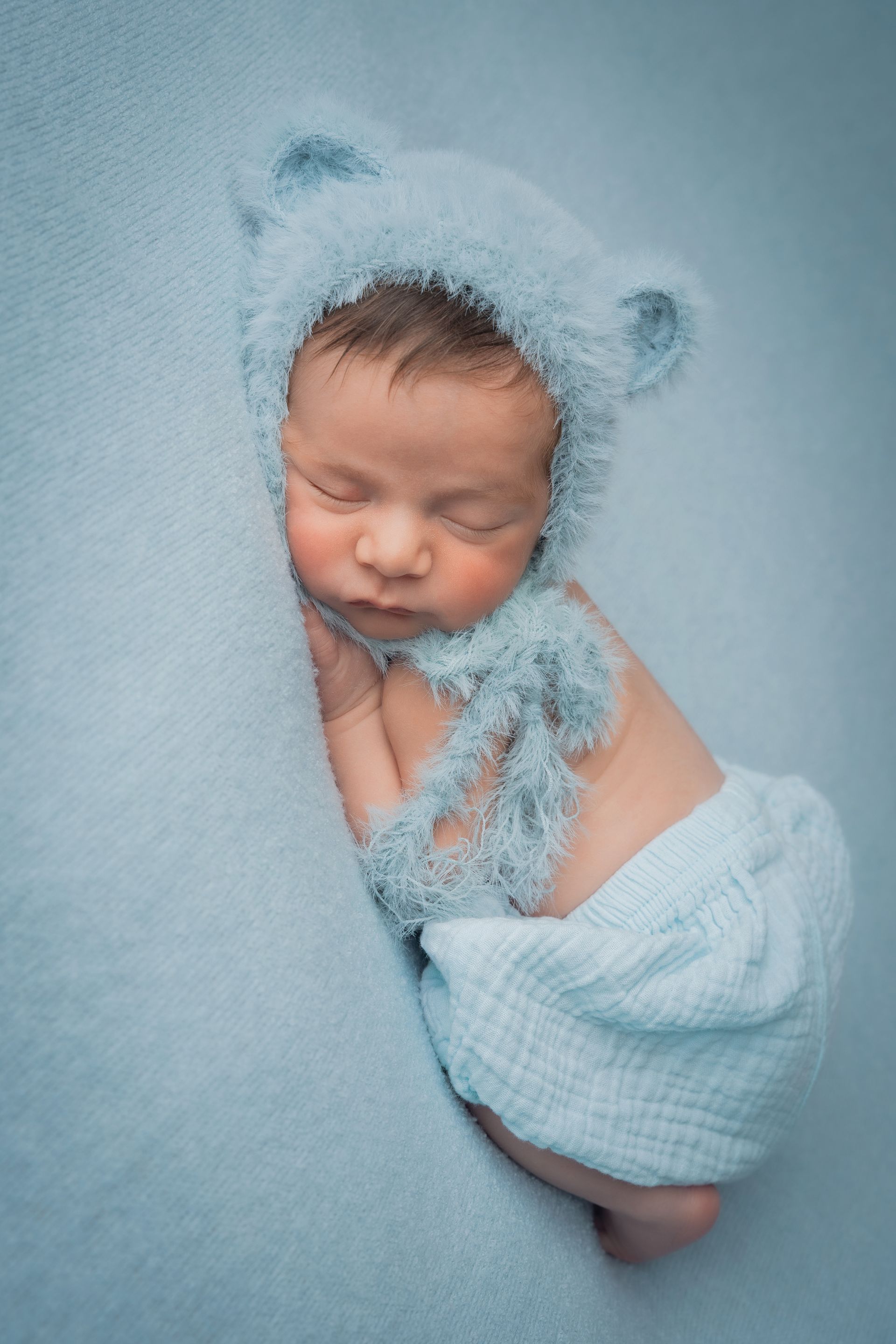
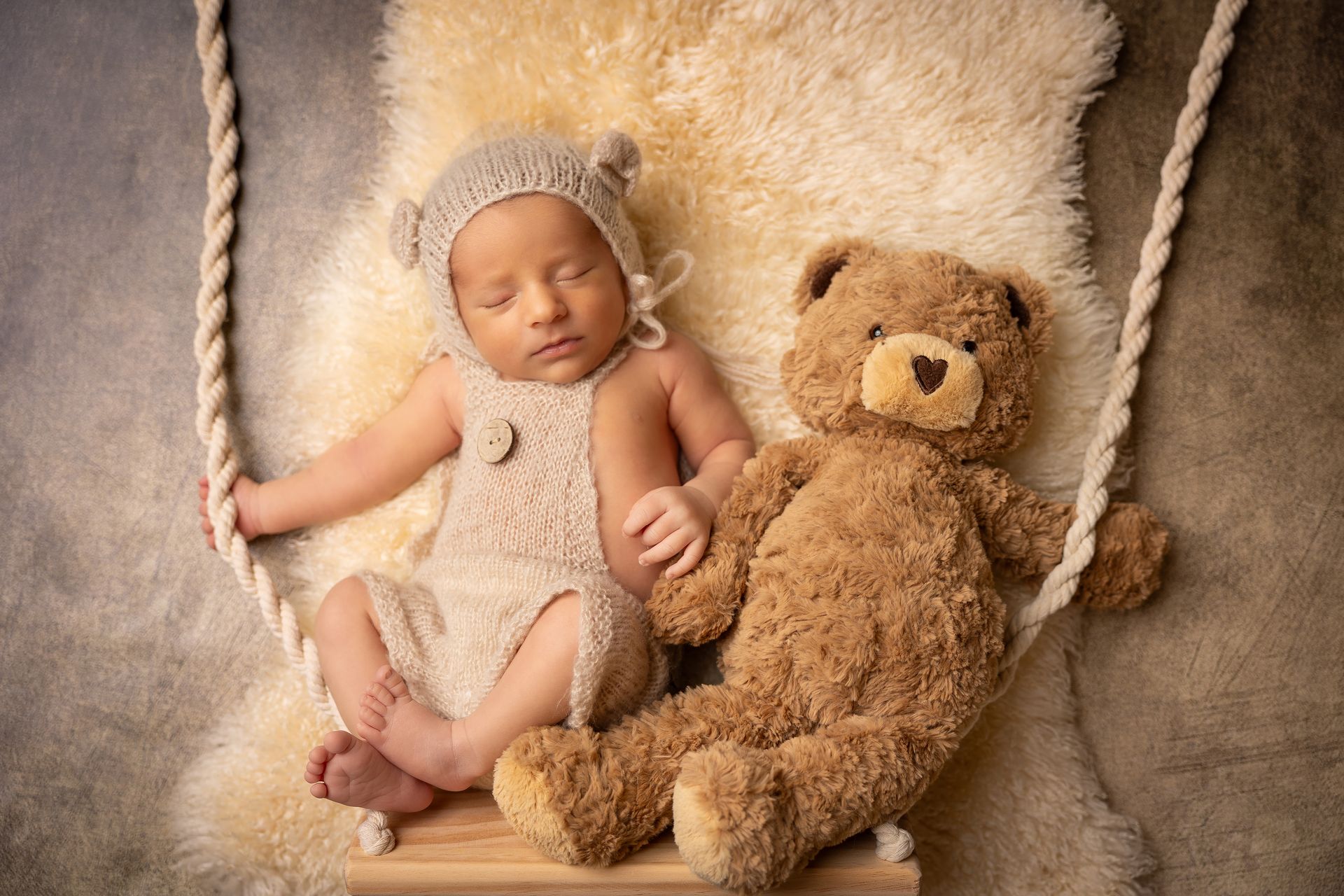








Yes. After 15 days newborns sleep for shorter stretches and the curled positions no longer come naturally, so I focus on open eyes and the parents' hands, and the portrait that comes out is that of an awake baby. Message me the exact age in days, so I can tell you what to expect before you book.
We move things around, which is why we don't set the exact date during pregnancy. We note the period and I keep a margin of free mornings around the expected week. You message me as soon as the baby is born, even from the hospital, and from there we set the morning within the first 10 to 15 days.
Yes, and I photograph them first, for as long as they feel like it. A small child in front of the camera cooperates for a short stretch, so we take the shots with them straight away and then let them go and play while I continue with the newborn. When they get tired, whoever takes them out of the room helps everyone, the newborn included.
Those images are made from two shots layered together afterwards. Newborns cannot support their own weight and I never leave them balanced precariously: while I photograph there is a hand on the baby, mine or a parent's, which often can't be seen in the finished photo. I won't try a pose I haven't prepared just because you saw it the night before.
Message me the expected week of the birth, or the baby's age in days if they're already born, and I'll reply with the quote. The session includes the time in the studio, the selection and post production of the shots I deliver; albums, prints and high resolution files are chosen afterwards, in front of the photos.
I answer personally. If you prefer, message me directly on WhatsApp: it is the fastest way.